

0 Number vs 1 Number Laddu Gopal Dress For Janmashtami
0 number and 1 number are the two smallest sizes on the standard Laddu Gopal murti scale — roughly 1.75 inches and 2.2 inches in height. Since Janmashtami 2026 falls on September 4 (observed a day later by many Vaishnav households and ISKCON temples), this is peak season for these compact sizes, which are the most gifted, most travelled-with, and most lovingly dressed up of all. Daivik Vastram's 0 and 1 number Janmashtami collection includes silk poshaks, zari-work sets, and peacock-theme outfits cut specifically for these tiny proportions.
-
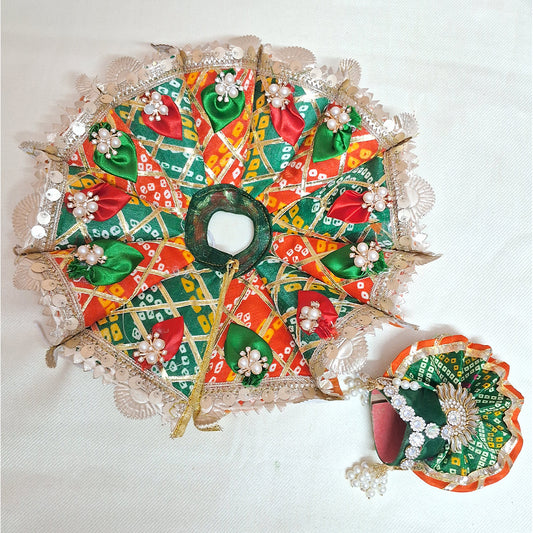
Cone Multicolor Bandhani Laddu Gopal Poshak With Pagadi
Regular price From Rs. 849.00Regular priceRs. 1,199.00Sale price From Rs. 849.00Sale -
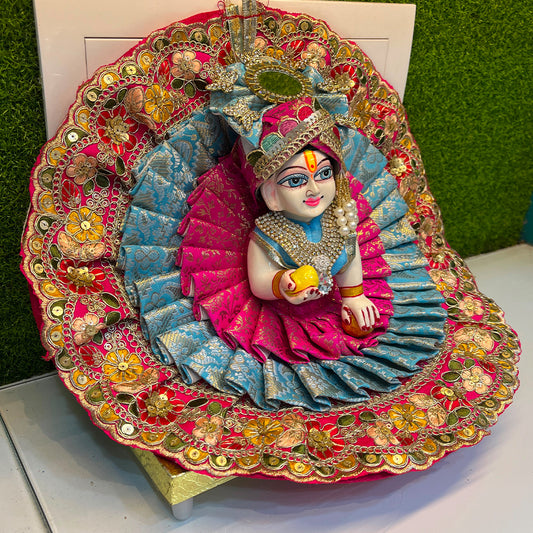
Blue Handcrafted Laddu Gopal Poshak Set with Mukut
Regular price From Rs. 689.00Regular priceRs. 999.00Sale price From Rs. 689.00Sale -
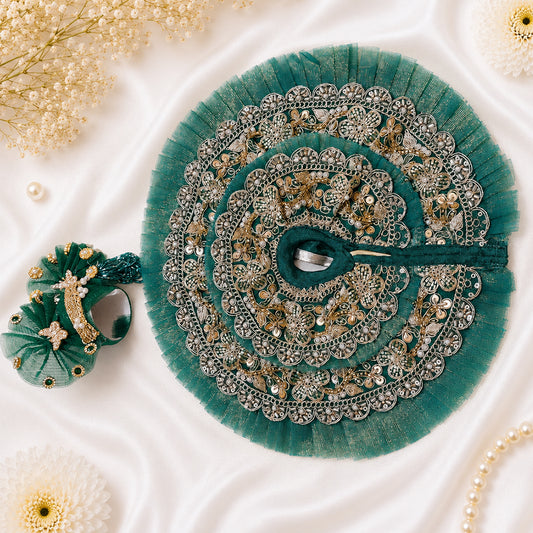
Emerald Green Handcrafted Laddu Gopal Dress with Pagadi
Regular price From Rs. 749.00Regular priceRs. 1,199.00Sale price From Rs. 749.00Sale -
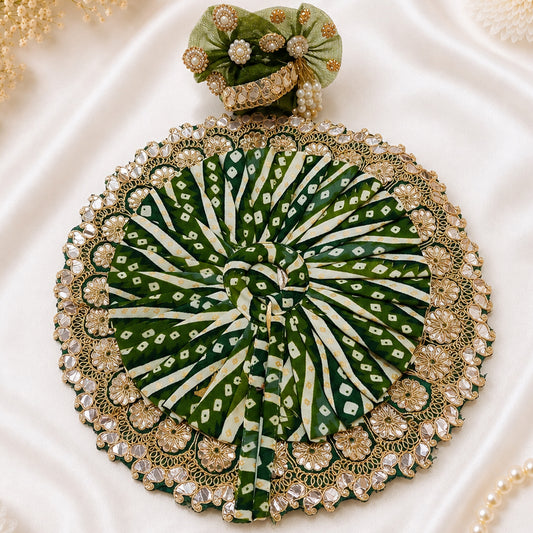
Green Printed Laddu Gopal Poshak with Pagadi
Regular price From Rs. 649.00Regular priceRs. 1,199.00Sale price From Rs. 649.00Sale -
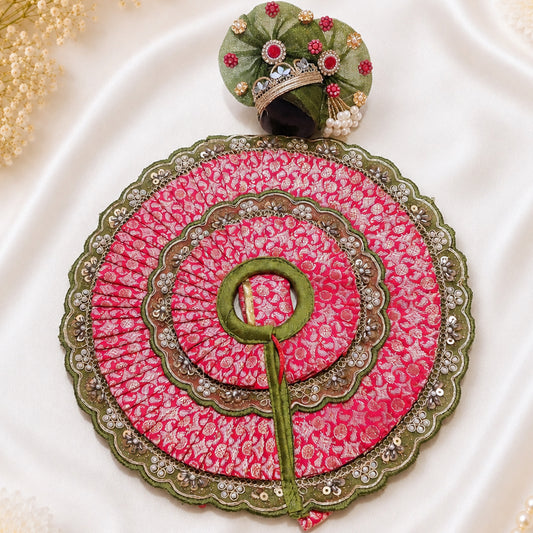
Magenta Handcrafted Laddu Gopal Poshak Set with Mukut
Regular price From Rs. 589.00Regular priceRs. 999.00Sale price From Rs. 589.00Sale -
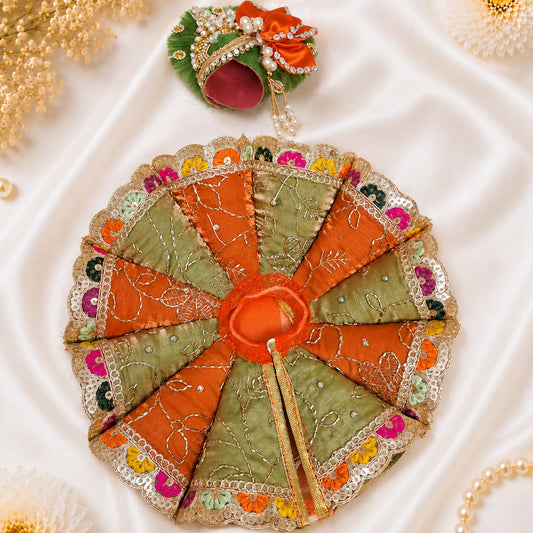
Cone Olive Green & Orange Handcrafted Laddu Gopal Dress with Pagadi
Regular price From Rs. 749.00Regular priceRs. 1,199.00Sale price From Rs. 749.00Sale -
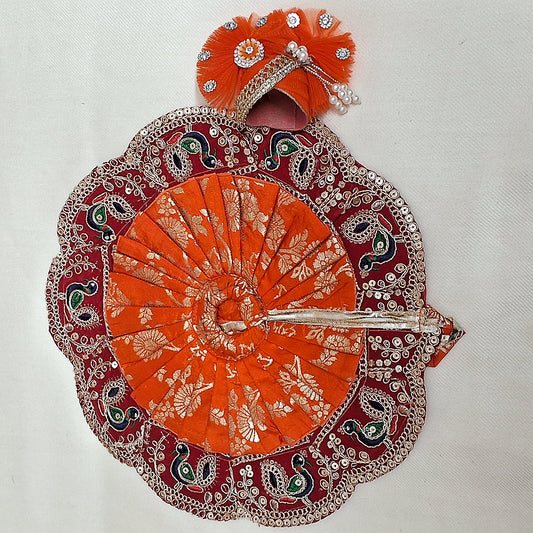
Orange & Maroon Laddu Gopal Poshak
Regular price From Rs. 749.00Regular priceRs. 1,199.00Sale price From Rs. 749.00Sale -
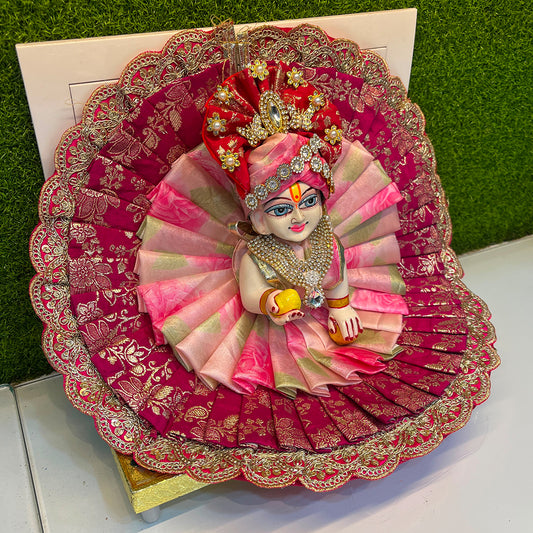
Pink & Green Floral Laddu Gopal Poshak with Pagadi
Regular price From Rs. 749.00Regular priceRs. 1,199.00Sale price From Rs. 749.00Sale








Every year, as Janmashtami draws near, homes across India begin the same joyful ritual — picking out a brand-new poshak for their Laddu Gopal. If your Thakurji is among the smallest and most delicate of murtis, sized at 0 number or 1 number, you already know that finding a dress which is both festive and correctly fitted is trickier than shopping for a bigger idol. Tiny seams and precise proportions matter far more at this scale.
This guide from Daivik Vastram covers everything you need to know about choosing a 0 and 1 number Laddu Gopal dress for Janmashtami — what these sizes actually mean, the best styles for the festival, how to buy the right fit, and how to complete your little Kanha ji's look so He shines as brightly as the celebration deserves.
What Do 0 Number and 1 Number Mean for a Laddu Gopal Murti?
Laddu Gopal — the beloved infant form of Lord Krishna — is worshipped in Indian homes not as a distant deity but as a living child who is bathed, fed, dressed, and put to sleep every day. Sellers across the country use a standard numbering system to describe murti height, and 0 number and 1 number sit at the very bottom of that scale, making them the smallest widely available sizes.
Many devotees begin their journey with a Thakurji at exactly this size. A 0 or 1 number Laddu Gopal fits comfortably in your palm, travels easily in a small pouch, and sits neatly on a study table, office desk, or car dashboard. Students moving away for higher studies, professionals in shared accommodation, and families with limited puja space often choose this size precisely because it asks for so little room while giving back so much devotion.
Because these murtis are so small, dressing them correctly takes more care than dressing a larger idol. A poshak that's even slightly oversized will swamp a 1 number Gopal ji completely, while one that's too snug won't sit properly around such a tiny frame — which is exactly why a dress cut specifically for this scale makes such a visible difference on Janmashtami.
0 Number vs 1 Number Laddu Gopal: Quick Size Comparison
Before you shop, it helps to know exactly which size your Thakurji belongs to. Most sellers follow a broadly similar convention, though small variations exist between artisans and brands, so a quick physical measurement is always the safest way to confirm.
| Size | Approx. Height | Feel of the Idol | Typically Chosen For |
|---|---|---|---|
| 0 Number | ~1.75 inches | Thumb-sized | Travel altars, gifting, very compact temples |
| 1 Number | ~2.2 inches | Finger-sized | Study tables, office desks, first home mandir |
To measure your own murti, run a soft measuring tape from the sole of the feet to the top of the head, excluding any separately carved crown, and compare the reading against your chosen brand's size chart. If the reading falls between two sizes, it's generally safer to size up slightly rather than down — a poshak that's a touch loose can still be tied neatly, while one that's too tight won't close properly. For a full breakdown across every size, Daivik Vastram's detailed Laddu Gopal size chart guide covers sizes 0 through 14, with measurement tips for different murti builds.
Why Janmashtami Calls for a Fresh 0 or 1 Number Poshak
Janmashtami marks the night Lord Krishna was born in Mathura, and Vaishnav households treat the day with the same joy as welcoming a newborn into the family. Central to the celebration is shringar — the ritual of dressing Thakurji in fresh clothes, ornaments, and flowers before the midnight aarti.
For a 0 or 1 number Laddu Gopal, Janmashtami is often the one occasion each year that calls for a poshak beyond everyday wear — richer fabric, finer embroidery, a matching crown, and sometimes a small jhula to mark the birth moment itself. Because these murtis are so small, the entire difference between an ordinary day and a festive one comes down to the outfit, which is exactly why choosing the right 0 and 1 number Laddu Gopal dress for Janmashtami matters so much this time of year.
Many families also choose Janmashtami as the day they formally welcome a new 0 or 1 number Thakurji home, which makes that first poshak doubly meaningful — it becomes forever linked to your Gopal ji's very first birthday celebration in your care.
Best Styles of 0 and 1 Number Laddu Gopal Dresses for Janmashtami
Silk and satin poshak The most popular Janmashtami choice, silk and satin hold their shape beautifully even at this small scale. Look for a soft-finish fabric rather than stiff brocade, which is genuinely harder to drape around such tiny proportions.
Zari and stone-work sets For the midnight celebration itself, many devotees prefer a poshak finished with fine zari borders or delicate stone and pearl detailing. At 0 and 1 number sizes, keep embellishment light and flat, since heavy stonework can unbalance a small idol or make the dress awkward to tie.
Peacock and mor pankh theme outfits The peacock feather is one of Krishna's most recognisable symbols, so Janmashtami-special poshaks often feature peacock motifs, mor pankh prints, or a small feather tucked into the crown. These translate especially well to 0 and 1 number murtis, where the compact print scales down without losing its detail.
Jhula and palna (cradle) sets Since Janmashtami celebrates a birth, many households dress their Laddu Gopal in a simple outfit for the midnight moment and place Him in a small decorated jhula or palna, before changing Him into the main festive poshak for the rest of the celebration.
Complete shringar sets A complete set — poshak, mukut (crown), a small bansuri (flute), and a mini vaijanti mala — removes the guesswork of matching pieces individually. This is especially useful at 0 and 1 number sizes, where mismatched proportions are the most common styling mistake.
How to Choose the Right Size Dress for Your Laddu Gopal
Shopping at this scale is genuinely different from buying for a larger murti:
- Measure before you buy. Match your murti's actual height to the seller's size chart rather than assuming from the "0" or "1" label alone, since conventions vary slightly between brands.
- Prioritise soft, lightweight fabric. At under 2.5 inches, stiff material won't drape naturally — soft silk, georgette, or fine cotton-silk blends sit far more realistically.
- Check the closure style. Fiddly hooks and multiple ties are frustrating at this scale. Look for simple back-tie or wrap-style closures made specifically for 0 and 1 number murtis.
- Match the colour to the occasion. Yellow, peacock blue, and royal shades like maroon or magenta are traditional Janmashtami colours symbolising joy, while white-and-gold combinations are equally popular for the midnight moment.
- Buy accessories from the same size family. A mukut or mala made for a 3 or 4 number idol will overwhelm a 0 or 1 number Gopal ji, so confirm every accessory is labelled for your exact size.
- Order ahead of the festival. Handcrafted 0 and 1 number sets often take slightly longer to finish than standard sizes, so ordering one to two weeks before Janmashtami gives you a comfortable buffer.
Styling Guide: Completing Your Laddu Gopal's Janmashtami Look
A handful of finishing touches complete the celebration look once the poshak is decided:
- Mukut (crown): A lightweight crown, ideally with a peacock feather detail, is the single most transformative accessory for a 0 or 1 number idol.
- Bansuri (flute): A small flute resting in or near the hands instantly signals Krishna's most iconic pose.
- Vaijanti mala: A thin, proportionally small garland adds colour around the neck without overwhelming the outfit beneath it.
- Kaustubh mani (pendant): A tiny central pendant on the chest is a classic finishing touch for festive shringar.
- The setting: A small chowki (platform) with a fresh flower or two, or a miniature jhula for the midnight moment, elevates the whole presentation without needing anything elaborate.
The golden rule at this scale is restraint. One well-chosen crown and one flute will look more graceful on a 1 number Gopal ji than several heavy accessories competing for space on such a small frame.
How to Care for a Small Laddu Gopal Poshak
Small poshaks need gentler handling than you might expect, partly because there's so little fabric to begin with.
- Avoid washing where possible. Most 0 and 1 number poshaks, especially zari and stone-work pieces, are best wiped with a soft, slightly damp cloth rather than washed, since water can loosen delicate threadwork at this scale.
- Store flat, not folded tightly. Tiny garments crease more visibly than larger ones, so a small pouch or flat box keeps the shape intact between uses.
- Keep away from prolonged direct sunlight, which fades zari and dulls embroidery colour faster on lightweight fabric.
- Iron on the lowest setting, if at all, working from the inside of the garment to protect any embellishment on the outer side.
- Rotate your collection. If you dress your Laddu Gopal daily, keeping a couple of festive poshaks in reserve means each outfit is worn less often and lasts for many Janmashtamis to come.
Why Choose Daivik Vastram for Your Laddu Gopal's Janmashtami Poshak
At Daivik Vastram, our 0 and 1 number Laddu Gopal dress collection for Janmashtami is built around exactly these small-scale challenges. Every poshak is cut to the precise proportions of these two sizes rather than simply scaled down from a bigger pattern, so the drape, closures, and embellishment placement all sit correctly on your Thakurji.
Our Janmashtami range includes silk poshaks, zari-bordered festive sets, peacock-theme outfits, and complete shringar sets with matching mukut and mala — all sized specifically for 0 and 1 number murtis, so you're never left guessing whether an accessory will fit. Every product is checked against our full Laddu Gopal size chart, covering sizes 0 through 14, so you can shop with confidence whether this is your first Thakurji or an addition to an already-loved collection.
Because Janmashtami preparations are time-sensitive, our smaller sizes are kept well-stocked in the weeks leading up to the festival, with clear size guidance on every product page to help you choose correctly the first time.
Frequently Asked Questions
What does 0 number and 1 number mean in Laddu Gopal murtis?
The number refers to a standard size scale used across the Laddu Gopal trade. 0 number is generally the smallest widely available size, at roughly 1.75 inches, while 1 number is slightly taller, at roughly 2.2 inches. Higher numbers indicate progressively larger murtis.
What is the difference between a 0 number and 1 number Laddu Gopal dress?
A 0 number poshak is cut for a thumb-sized murti, while a 1 number poshak fits a slightly larger, finger-sized idol. The two aren't interchangeable — a 1 number dress hangs loosely on a 0 number murti, and a 0 number dress won't close properly around a 1 number one.
How do I know if my Laddu Gopal is 0 number or 1 number?
Measure your murti from the sole of the feet to the top of the head with a soft measuring tape, excluding any separately carved crown, and compare that reading to your chosen brand's size chart, since exact measurements can vary slightly between artisans.
What should Laddu Gopal wear on Janmashtami?
A fresh festive poshak in silk or zari-work, paired with a mukut, a small bansuri, and a light vaijanti mala, is the traditional choice for Janmashtami. Many households also use a small jhula or palna to mark the midnight birth moment.
Can I wash a 0 or 1 number Laddu Gopal poshak?
Small, heavily embellished poshaks are best wiped gently with a soft damp cloth rather than washed, since water can loosen fine zari or stonework at this scale. Simple cotton or silk poshaks without heavy embellishment can usually tolerate a gentle hand wash.
When should I order a Janmashtami poshak for a 0 or 1 number Laddu Gopal?
Janmashtami 2026 falls on September 4, with many Vaishnav households and ISKCON temples observing it a day later, on September 5. Ordering your poshak at least one to two weeks in advance is a good idea, since small handcrafted sizes can take slightly longer to finish.
Final Thoughts
Dressing a 0 or 1 number Laddu Gopal for Janmashtami is a small act with a big heart behind it — the proportions may be tiny, but the devotion behind them certainly isn't. Whether you're choosing His very first festive poshak or adding to an already-loved wardrobe, getting the size, fabric, and styling right lets your Kanha ji's Janmashtami shine exactly as it should.
Explore Daivik Vastram's 0 and 1 number Laddu Gopal Janmashtami collection to find a poshak, crown, and accessory set made specifically for your Thakurji's proportions — because even the smallest Gopal ji deserves the fullest celebration.


