
Silk vs Velvet vs Cotton Poshak for Laddu Gopal, Which Fabric to Choose When
Silk vs Velvet vs Cotton Poshak for Laddu Gopal — Which Fabric to Choose When
Walk into any serious Laddu Gopal bhakt's home and peek into their poshak collection. You will almost certainly find more than one type of fabric represented there — a silk poshak folded carefully for festival occasions, a soft cotton poshak for daily summer mornings, a rich velvet set waiting for the cold months of winter.
This variety is not accidental. It is wisdom.
The most devoted bhakts understand something that newer worshippers often discover only after a few seasons of experience: the right poshak is not just about beauty — it is about appropriateness. Appropriateness to the weather. To the occasion. To the specific quality of devotion the day calls for. To the way a particular fabric looks in the light of a diya, or how it feels when you hold it in your hands before placing it on your beloved Kanha ji.
Choosing the right fabric for your Laddu Gopal poshak is one of the most meaningful decisions in a bhakt's seva practice. And yet, for many devotees — especially those who are beginning to build a thoughtful wardrobe for Thakurji — the choice between silk, velvet, cotton, and other fabrics can feel overwhelming.
Daivik Vastram's complete fabric guide is here to change that. By the end of this comprehensive comparison, you will know exactly which fabric to choose for every season, every festival, every occasion, and every budget — and your confidence in poshak shopping will be transformed permanently.
-
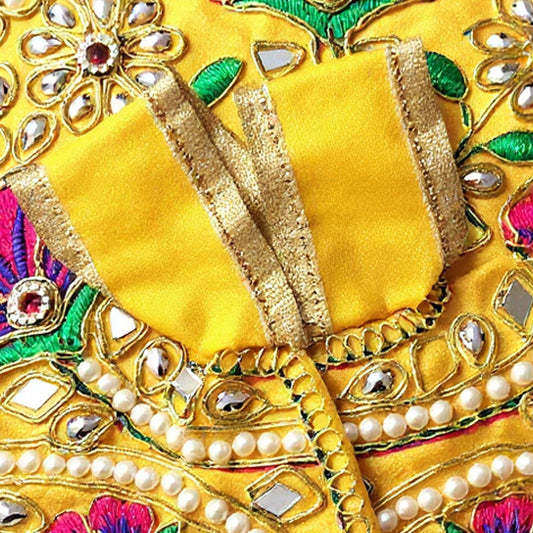
Laddu Gopal Soft Peach Dress with Pearl & Zari Work
Regular price From Rs. 350.00Regular priceRs. 0.00Sale price From Rs. 350.00 -
Laddu Gopal Yellow Dress with Pearl & Zari Work
Regular price From Rs. 315.00Regular priceRs. 392.00Sale price From Rs. 315.00Sale -
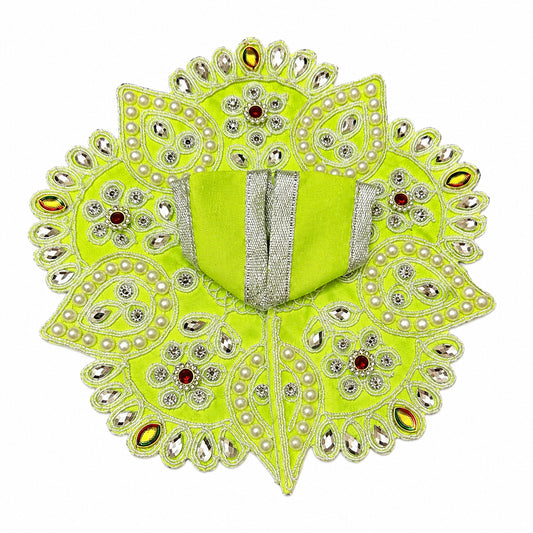
Lime Green Pearl & Mirror Work Laddu Gopal Dress for Kanha Ji
Regular price From Rs. 315.00Regular priceRs. 365.00Sale price From Rs. 315.00Sale -
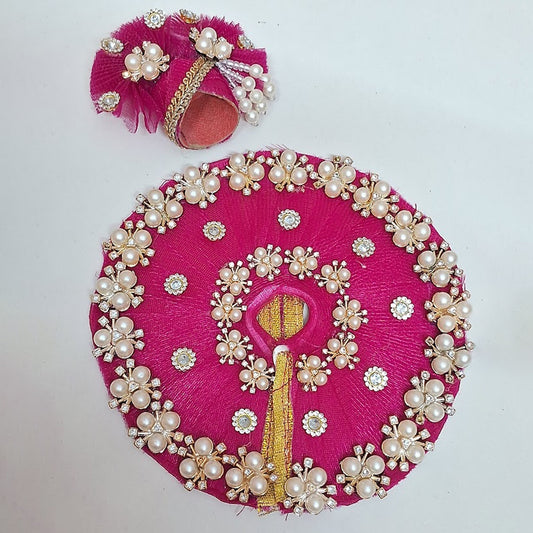
Magenta Laddu Gopal Poshak | Pearl & Navaratna Embellished Kanha Ji Dress With Pagadi | Sizes 0 to 6 | Premium Rani Pink Thakurji Outfit
Regular price From Rs. 549.00Regular priceRs. 799.00Sale price From Rs. 549.00Sale




Why Fabric Choice Is an Act of Devotion
Before the comparison begins, it is worth pausing on something important.
In the tradition of vastra seva — the offering of clothing to the divine — the quality and appropriateness of what you offer matters as much as the act of offering itself. Ancient devotional texts describe the ideal vastra as one that is clean, appropriate to the season, beautiful, and offered with a loving heart.
The seasonal dimension is particularly significant. Just as we change our own clothing when the weather changes — putting on warm layers in December, reaching for light cotton in May — seva for Thakurji follows the same attentive, caring logic. A heavy velvet poshak in the peak of summer heat and a thin cotton poshak in the sharpest cold of January both miss the mark of appropriateness that complete seva calls for.
Choosing the right fabric with seasonal and occasional intentionality is not a luxury for advanced bhakts. It is simply the most natural expression of genuine love for Kanha ji.
Daivik Vastram's collection makes this practice accessible to every bhakt — offering premium quality poshaks in all the right fabrics, for all the right moments.
Meet the Main Fabrics — A Character Introduction
Before comparing them directly, let us understand each fabric on its own terms — what it is, what it looks and feels like, and what it naturally communicates when worn by Thakurji.
Silk — Festival Fabric
Silk is one of nature's most extraordinary materials. Produced by the silkworm, silk is a protein-based fibre with a natural lustre — the characteristic shimmer that no synthetic material has ever quite replicated. When light falls on pure silk, it does not just reflect — it glows, as though the fabric has its own inner radiance.
For Thakurji's poshak, silk communicates grandeur, celebration, and the highest devotional offering. It is the fabric that says: today is a special day, and Kanha ji deserves to be dressed in the finest. It drapes beautifully, carries embroidery magnificently, and holds its colour richly. Silk is the gold standard of festival dressing.
Silk poshaks from Daivik Vastram are crafted in pure silk — not blended or imitation variants — ensuring the natural lustre, the rich drape, and the embroidery integrity that defines a truly premium poshak.
Silk's character in one phrase: Luminous celebration
Velvet — Winter Royalty Fabric
Velvet is woven from silk, cotton, or synthetic fibres with a characteristic dense pile — thousands of tiny fibres standing upright from the base weave to create a plush, tactile surface that is uniquely warm and visually rich. Velvet does not shimmer like silk — instead, it absorbs light and reflects it back as a deep, glowing warmth that is unlike any other fabric.
For Thakurji's poshak, velvet communicates depth, warmth, and a kind of quiet magnificence. It is the fabric of winter royalty — of the darkest, coldest months when the golden thread embroidery on a deep navy or maroon velvet poshak catches the warm light of morning diyas and creates a mandir scene of extraordinary beauty.
Daivik Vastram uses premium velvet with a genuine dense pile — not the thin, flat velvet common in mass-market products — ensuring that the warmth, the visual depth, and the embroidery integrity hold through repeated seasonal use.
Velvet's character in one phrase: Deep winter royalty
Cotton — Everyday Devotion Fabric
Cotton is the oldest and most universal textile in India. It is spun from the fluffy fibres of the cotton plant — natural, breathable, gentle, and completely comfortable against any surface. Cotton does not shimmer like silk or glow like velvet. What cotton does is something both simpler and more profound: it feels honest.
For Thakurji's poshak, cotton communicates simplicity, everyday love, and the kind of devotion that does not require grand occasion — the love that shows up every morning, reliably and warmly, without needing to make a statement. Cotton poshaks are the fabric of daily seva — the morning and evening worship that forms the quiet backbone of a bhakt's devotional life.
Daivik Vastram's cotton collection includes fine Jaipuri prints, soft mulmul, and embroidered cotton designs that elevate this humble fabric into something genuinely beautiful without losing its essential character of warm simplicity.
Cotton's character in one phrase: Honest everyday love
Brocade — Traditional Celebratory Fabric
Though not in this article's title, brocade is important enough to include as a fourth fabric comparison point. Brocade is woven fabric — typically in silk or a silk blend — with raised gold and silver thread patterns created directly in the weave rather than added as embroidery afterward. The result is a fabric that is inherently rich, heavy, and structurally magnificent.
Brocade occupies a space between silk and velvet in the seasonal appropriateness spectrum — heavier than silk, not as warm as velvet, and uniquely appropriate for the transitional festival seasons of autumn and early winter. Diwali, Govardhan Puja, and the Kartik celebrations are brocade's natural home.
Brocade's character in one phrase: Traditional festival heritage
Georgette — Lightweight Festival Fabric
Georgette is a fine, slightly textured fabric with a gentle flow. Lighter than silk and with a subtle crinkle texture, georgette is the ideal fabric for warm-weather festivals — Navratri, Radha Ashtami, and Holi — when the season calls for something celebratory but the temperature calls for lightness and breathability.
Georgette's character in one phrase: Festive and airy grace
Head-to-Head Comparison — Silk vs Velvet vs Cotton vs Others
Now that we know each fabric's character, let us compare them directly across the factors that matter most to a bhakt choosing Thakurji's poshak.
Factor 1 — Seasonal Appropriateness
This is the most important factor and the one that should guide most fabric decisions.
Silk: Seasonally versatile but leans toward moderate temperatures. Best from September through February for festival occasions. Slightly warm for peak Indian summer (April to June) but manageable for short puja periods. Available in heavier and lighter weights for seasonal flexibility.
Velvet: Strictly a cold-weather fabric. Ideal from October through February in North India, November through January in central India. The dense pile retains warmth beautifully — exactly what Thakurji needs during sharp winter mornings. Never appropriate for summer months — too heavy and too warm.
Cotton: Strictly a warm-weather fabric and the best summer choice by far. Ideal from March through August when Indian temperatures are at their most intense. Cotton poshaks keep Thakurji's seva light and appropriate during the hottest months. Also excellent for the early autumn transition period of September.
Brocade: Best for October through December — the Diwali and early winter festival cluster. The weight of brocade is right for this period's mild cold without the full warmth of velvet.
Georgette: Best for August through October — the monsoon and early autumn festival period of Navratri, Radha Ashtami, and Dussehra. Light, flowing, and festively appropriate.
Simple seasonal calendar:
- March to August → Cotton and Mulmul
- August to October → Georgette
- October to December → Brocade and Silk
- December to February → Velvet and Heavy Silk
- Festivals year-round → Pure Silk for grand occasions
Factor 2 — Visual Impact in Diya and Puja Light
The quality of light in a home mandir — the soft glow of a ghee diya, the warm flicker of an oil lamp, the steady warmth of a single candle — is unlike any other light. The right fabric makes Thakurji look extraordinary in this light. The wrong fabric looks flat and lifeless.
Silk: Exceptional in puja light. The natural lustre of silk catches the warmth of a diya flame and amplifies it — Thakurji appears to glow from within. Silk embroidery, particularly golden zari, becomes genuinely dazzling under diya light.
Velvet: Magnificent in puja light. Velvet absorbs and diffuses light rather than reflecting it, creating a deep, warm, glowing effect. Golden embroidery on dark velvet under a diya creates one of the most visually stunning effects possible in a home mandir.
Cotton: Gentle in puja light. Cotton does not dazzle or glow — it presents itself warmly and honestly. For daily seva, this gentle quality is actually ideal. For festival nights when you want Thakurji to truly stand out, cotton is not the first choice.
Brocade: Spectacular in puja light. The raised gold and silver thread patterns in brocade create multiple light-reflecting surfaces across the entire fabric — Thakurji dressed in brocade under diya light looks like He is wearing woven gold.
Factor 3 — Embroidery Compatibility
The most beautiful Laddu Gopal poshaks combine fabric and embroidery in a way where each enhances the other. Different fabrics work with embroidery differently.
Silk: The ideal embroidery canvas. Silk's smooth surface allows every embroidery technique — zari, gota patti, sequence, stone work, thread embroidery — to sit cleanly and display maximally. The contrast between silk's base sheen and metallic embroidery is uniquely beautiful.
Velvet: Works exceptionally well with heavy embroidery. The dense pile of velvet creates a textural contrast with flat zari embroidery that makes the gold seem even brighter and more precise. However, velvet's thickness means delicate fine embroidery can be slightly obscured — bold, dense embroidery styles work best.
Cotton: Best suited to printed designs, hand-block work, and relatively simple embroidery — colourful thread work, gota patti borders, and Jaipuri print patterns. Heavy zari embroidery on cotton does not have the same visual impact as on silk, though lighter embroidery sits beautifully.
Brocade: Technically already embroidered through its weaving. The raised thread patterns are part of the fabric structure. Additional hand embroidery on brocade is possible but the fabric is rich enough without it.
Factor 4 — Durability and Longevity
How well does each fabric last through the regular use and washing that Thakurji's seva requires?
Silk: With proper care (gentle hand washing, shade drying, muslin storage) pure silk is extremely durable and can last five to ten years or more. Without proper care, silk degrades relatively quickly.
Velvet: Very durable fabric — the pile is resilient when cared for correctly. The main vulnerability is pile crushing from improper storage or ironing. With correct care (flat storage, steam rather than iron), velvet lasts many years.
Cotton: The most durable of all poshak fabrics for everyday use. Cotton handles regular washing well, maintains its colour with reasonable care, and lasts longest in practical daily seva terms. The right choice for poshaks that will be used and washed frequently.
Brocade: Highly durable in terms of fabric structure — the woven gold and silver threads are very resilient. Requires careful folding during storage to avoid permanent crease marks in the raised pattern.
Factor 5 — Occasion Matching
Silk: Janmashtami, Diwali, Navratri, Radha Ashtami, weddings, housewarming puja, Ekadashi, and any day you want Thakurji to look truly magnificent.
Velvet: Winter daily seva, Makar Sankranti, Diwali (particularly for colder regions), and any festival falling in the October to February window.
Cotton: Daily summer seva, Holi, Ram Navami, and casual everyday puja throughout the warm months.
Brocade: Diwali, Govardhan Puja, Annakoot, and the autumn festival cluster.
Georgette: Navratri, Radha Ashtami, Hartalika Teej, and warm-weather festivals.
Factor 6 — Accessibility and Price Range
Cotton: The most accessible price point. Daily wear cotton poshaks from Daivik Vastram are available at genuinely affordable prices without compromising on quality or design.
Georgette: Mid-range pricing. Slightly more than cotton, with the added benefit of festive fabric quality.
Silk: Mid to premium pricing depending on silk weight and embroidery density. Festival silk poshaks represent a meaningful investment that justifies itself through longevity and visual impact.
Velvet: Mid to premium pricing. Winter velvet poshaks with dense embroidery represent excellent value when considering that they serve the entire winter season's daily seva.
Brocade: Premium pricing reflecting the craft of handwoven construction. Festival brocade sets are the single most investment-worthy poshak purchase in a bhakt's annual calendar.
Practical Decision Framework — Which Fabric Should You Buy Today?
Use this simple framework to decide:
Is it currently summer (March to August)? → Buy cotton or mulmul.
Is it currently monsoon or early autumn (August to October)? → Buy georgette or light silk.
Is there a major festival coming up regardless of season? → Buy pure silk.
Is it winter (October to February)? → Buy velvet for daily seva, brocade or heavy silk for festivals.
Are you building a starter wardrobe for a new Thakurji? → Begin with one cotton poshak for daily use and one silk poshak for festivals. Add velvet when winter arrives. Build from there.
Do you want the single most versatile fabric that works for the widest range of occasions? → Pure silk. It is the one fabric that looks appropriate from mild festival occasions to the grandest of celebrations, across most of the year.
Browse the complete poshak collection in all fabrics and find exactly what Thakurji needs today: 👉 Laddu Gopal Dress Collection — Daivik Vastram
Building Thakurji's Complete Fabric Wardrobe — The Ideal Collection
The most devoted bhakts build a wardrobe for Thakurji that covers all seasons and all occasions. Here is Daivik Vastram's recommended complete wardrobe by fabric type:
Essentials (Starting Wardrobe):
- 2 cotton poshaks for summer daily seva
- 1 pure silk poshak for festivals and special occasions
- 1 velvet poshak for winter daily seva
Complete Wardrobe:
- 3 to 4 cotton poshaks for summer rotation
- 2 pure silk poshaks for different festival occasions
- 2 velvet poshaks for winter rotation
- 1 brocade set for Diwali and autumn festivals
- 1 georgette poshak for Navratri and warm-weather festivals
Full Devotional Collection: All of the above, plus seasonal Navratri colour-specific poshaks, Janmashtami limited edition silk, and Holi special cotton collection.
Every piece of this wardrobe is available from Daivik Vastram — at the quality, in the sizes, and with the devotional craftsmanship that Thakurji deserves.
Explore and shop the complete fabric range now: 👉 Shop Laddu Gopal Poshak by Fabric — Daivik Vastram
What Bhakts Say About Choosing the Right Fabric
- "I used to buy whatever poshak looked beautiful in the photo. Since I started choosing by fabric and season, my whole relationship with Thakurji's seva has deepened. The right fabric makes such a difference." — Devotee from Delhi
- "The velvet poshak from Daivik Vastram transformed my winter morning puja. Kanha ji looked so warm and so regal that I actually stood in front of the mandir for a full five minutes just looking at Him." — Bhakt from Lucknow
- "I gifted my mother a complete seasonal wardrobe set — cotton for summer, silk for festivals, velvet for winter — all from Daivik Vastram. She said it was the most thoughtful gift she had ever received." — Devotee from Jaipur
- "The silk poshak on Janmashtami night. Under the diya. I have no words. Daivik Vastram's fabric quality made it look like Kanha ji was wearing light itself." — Bhakt from Mathura
Final Thought — Right Fabric Is the Right Love
Every fabric speaks a different language of devotion. Cotton says: I am here every morning, simple and steady and reliable. Silk says: today is your day, Kanha ji, and nothing less than the finest will do. Velvet says: the cold will not touch you while I am here. Brocade says: I offer you the heritage of India's greatest artisans.
All of these are love. All of these are seva. The bhakt who knows which language to speak on each occasion, in each season, for each festival — that bhakt is performing vastra seva in its fullest and most beautiful form.
Daivik Vastram gives you every fabric, every season, every language of love — for every Thakurji, in every home, across all of India.
Jai Shri Krishna! Radhey Radhey! 🙏
Published by Daivik Vastram | India's Most Trusted Laddu Gopal Poshak Brand Every Fabric. Every Season. Every Festival. Crafted With Devotion for Every Kanha Ji.
Frequently Asked Questions
Which fabric is best for Laddu Gopal poshak for daily use?
Cotton and mulmul are the best fabrics for daily Laddu Gopal seva. They are breathable, easy to wash, durable through frequent use, and available in beautiful printed and embroidered designs. Daivik Vastram's cotton collection offers a wide range of daily wear poshaks that are simple, elegant, and perfectly appropriate for morning and evening puja throughout the year.
When should I use a silk poshak for Laddu Gopal?
Pure silk poshaks are ideal for festivals and special occasions — Janmashtami, Diwali, Navratri, Radha Ashtami, Ekadashi, housewarmings, and any day that calls for Thakurji to look genuinely magnificent. Silk's natural lustre is especially breathtaking under diya and puja lamp light. Daivik Vastram's pure silk collection covers every major festival occasion throughout the Hindu calendar.
Is velvet suitable for Laddu Gopal poshak in summer?
No. Velvet is a dense, warm fabric designed for cold weather and is not appropriate for summer months. In peak summer heat — April through August — velvet is too heavy and too warm for comfortable seva. Reserve velvet poshaks for October through February when North India's winter makes warm, plush fabrics the natural and devotionally appropriate choice for Thakurji's dressing.
What is the difference between silk and georgette poshak for Laddu Gopal?
Pure silk is heavier, more lustrous, and carries dense embroidery more magnificently — ideal for grand festival occasions. Georgette is lighter, slightly textured, and more breathable — better suited for warm-weather festivals like Navratri and Radha Ashtami. Both are premium fabrics; the choice depends on the season and the occasion's required level of grandeur.
Which poshak fabric looks best under diya light in the mandir?
Silk and brocade look most spectacular under diya light — their natural shimmer and raised gold thread patterns catch the flame and glow magnificently. Velvet creates a deep, warm glow that is uniquely beautiful in winter puja settings. Cotton presents gently and honestly — ideal for daily worship but less visually dramatic than silk or brocade for festival occasions.
Which fabric is most durable for Laddu Gopal poshak?
Cotton is the most durable for frequent washing and regular daily use. Pure silk and velvet with proper care — gentle hand washing, shade drying, muslin storage — last five to ten years or more. Brocade's woven structure is extremely resilient when stored correctly. Daivik Vastram uses only genuine premium fabrics in all collections, ensuring maximum longevity with proper care.
What fabric should I choose for Laddu Gopal poshak for Janmashtami?
Pure silk is the undisputed choice for Janmashtami — the most sacred festival in the Laddu Gopal devotional calendar. Silk's natural lustre, combined with the dense golden embroidery in Daivik Vastram's Janmashtami collection, creates a poshak that communicates the full royal glory of Shri Krishna's birth celebration in the most visually and devotionally magnificent way possible.
Can I use the same poshak fabric year-round for Laddu Gopal?
While technically possible, using the same fabric year-round is not ideal seva practice. Heavy velvet in summer is too warm; thin cotton in deep winter lacks seasonal appropriateness. A thoughtful seasonal wardrobe — cotton for summer, silk for festivals, velvet for winter — is the most complete expression of vastra seva and reflects genuine attentiveness to Thakurji's care across the changing seasons.
Is brocade a good choice for Laddu Gopal poshak?
Yes. Handwoven brocade is an excellent choice for autumn and early winter festivals — particularly Diwali, Govardhan Puja, and Annakoot. Its inherent gold and silver thread patterns create intrinsic visual richness without requiring additional embroidery. Brocade represents India's finest textile heritage and brings that cultural depth directly to Thakurji's festive dressing.
Where can I buy Laddu Gopal poshaks in all fabric types from a single trusted brand?
Daivik Vastram at daivikvastram.com offers India's most complete Laddu Gopal poshak collection across all fabrics — pure silk, premium velvet, fine cotton, handwoven brocade, and georgette — in all sizes from Size 0 to Size 14. Every fabric is genuine, every design is devotionally crafted, and pan-India delivery ensures your Thakurji's wardrobe is always complete.


