
How to Wash and Store Laddu Gopal Poshak Properly, Care Tips by Fabric
How to Wash and Store Laddu Gopal Poshak Properly , Care Tips by Fabric
There is a quiet truth that every devoted bhakt discovers after a few seasons of caring for Laddu Gopal: the poshak is sacred, but it is also delicate.
The beautiful silk poshak you received for Janmashtami , with its dense golden zari embroidery and deep jewel-toned base , deserves not just to be worn with love but to be cared for with the same thoughtfulness. The soft cotton summer poshak. The plush winter velvet. The traditional brocade festival set. Each one is an investment of love, of devotion, and often of meaningful expense. Each one deserves to last , season after season, festival after festival , rather than fading, shrinking, or losing its beauty after the first few washings.
The difference between a poshak that lasts five years and one that loses its colour and shape within five months is almost always the same thing: how it was cared for.
This complete guide from Daivik Vastram , India's most trusted Laddu Gopal poshak brand , gives you everything you need to know. Fabric by fabric, step by step, we cover exactly how to wash, dry, press, and store each type of poshak so that your Thakurji's wardrobe stays as beautiful as the day it arrived.
-
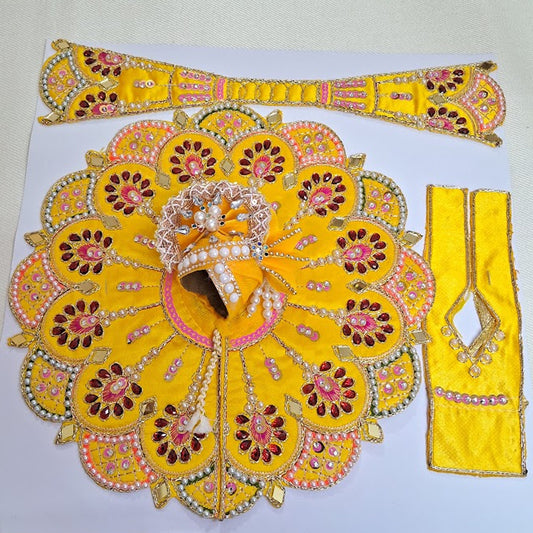
Premium Designer Yellow Laddu Gopal Poshak with Heavy Kundan Work & Jewelled Mukut
Regular price From Rs. 589.00Regular priceRs. 739.00Sale price From Rs. 589.00Sale

Why Proper Poshak Care Is an Act of Seva
Before the practical guidance, a word about why this matters beyond the merely functional.
For a bhakt who takes Thakurji seva seriously, every aspect of Kanha ji's world deserves care , including the state of His wardrobe. A poshak that has been washed carelessly, stored crumpled, or pressed roughly is not in the condition that befits the divine. A poshak that has been tenderly hand-washed, dried naturally, carefully pressed, and stored with reverence , that poshak carries the bhakt's care in every fibre.
Caring for Thakurji's poshaks is seva that happens in the quiet, unglamorous moments. Nobody sees it. It is not part of the visible aarti or the decorated festival mandir. But the bhakt who folds Kanha ji's poshak gently after washing, who wraps it in muslin before storing, who checks on the wardrobe before the next festival , that bhakt is performing seva in its most honest and continuous form.
Daivik Vastram crafts every poshak to last. And this guide will help you honour that craft with the care it deserves.
General Principles , Before We Begin the Fabric-Specific Guidance
Regardless of fabric type, a few universal principles apply to the care of every Laddu Gopal poshak:
Never machine wash any Laddu Gopal poshak. The size, the delicacy of the embroidery, and the fragility of most poshak fabrics make machine washing genuinely damaging , even on the gentlest cycle. Always hand wash.
Never wring or twist. Wringing causes fabric distortion, breaks embroidery threads, and permanently damages the shape of a poshak. Gently squeeze excess water using flat palms pressing together.
Never soak for extended periods. Long soaking loosens embroidery threads, causes colour bleeding, and weakens fabric structure. Wash promptly and briefly.
Always use cold or lukewarm water. Hot water causes shrinkage, colour loss, and fabric degradation in almost every poshak material. Room temperature or slightly warm water is always safer.
Test for colour bleeding before first wash. With any new poshak , especially deeply coloured ones , dip a corner of the fabric in cold water for thirty seconds and press against white cotton. If significant colour transfers, wash that poshak separately to prevent dye transfer to others.
Dry in shade, never in direct sunlight. Direct sunlight causes rapid and permanent colour fading in silk, cotton, and art silk. Always dry in a well-ventilated shaded area.
Store clean, never dirty. Never store a poshak that has absorbed incense smoke, agarbatti residue, chandan paste, or ittar fragrance without washing first. These substances can permanently stain fabric during storage.
Care Guide by Fabric , The Complete Breakdown
Silk Poshak Care , Protecting the Queen of All Fabrics
Silk is the most common fabric in Daivik Vastram's festival and special occasion poshak collection , and for good reason. Silk is luminous, elegant, and uniquely beautiful. It is also the fabric that requires the most careful handling.
Washing Silk Poshaks:
Fill a clean basin with cold water. Add a very small amount , literally a few drops , of mild baby shampoo or a specialist silk wash detergent. Never use regular detergent, washing powder, or soap bars on silk. These contain alkaline compounds that break down silk's protein structure and cause permanent dullness.
Submerge the poshak and gently swirl it in the water with your fingers. Do not rub, do not scrub, and do not agitate vigorously. The goal is to allow the water and mild detergent to lift surface impurities, not to physically work the fabric. This process should take no more than two to three minutes.
Rinse in fresh cold water until all detergent is removed. Never rinse silk under running tap water with force , the pressure can distort the fabric. Instead, fill and drain the basin two or three times until the water runs completely clear.
To remove excess water, lay the poshak flat on a clean dry towel and roll the towel gently. The towel absorbs moisture without any pressure being applied directly to the fabric. Never wring or squeeze.
Drying Silk Poshaks:
Lay flat on a clean dry surface in shade, reshaping gently to its original form while damp. Never hang a wet silk poshak , the weight of water stretches the fabric and distorts the shape.
Pressing Silk Poshaks:
If pressing is needed, iron on the lowest heat setting on the reverse side of the fabric only , never directly on the face of the embroidery. Place a clean damp cotton cloth between the iron and the silk as an additional protective buffer.
Storing Silk Poshaks:
Store in a clean muslin cloth or an acid-free tissue paper wrap. Never use plastic bags for silk storage , the trapped moisture promotes mildew. Keep in a cool, dry drawer away from direct light.
Velvet Poshak Care , Preserving the Pile
Velvet is the king of winter poshak fabrics , dense, warm, and magnificent. It is also the fabric that most bhakts find most intimidating to care for. The key to velvet care is understanding one fundamental fact: velvet's beauty lives in its pile, and the pile must never be crushed.
Washing Velvet Poshaks:
Very gentle spot cleaning is the preferred approach for velvet poshaks. For light dust and incense residue, use a very soft brush , a clean, dry makeup brush works perfectly , to lightly brush the surface of the velvet in the direction of the pile. This lifts surface particles without wetting the fabric at all.
For more significant soiling, use a barely damp clean sponge with a tiny drop of mild detergent. Dab , never rub , the soiled area very gently. The pile of velvet is permanently damaged by rubbing.
For a complete wash , performed seasonally rather than weekly , hand wash in cold water with baby shampoo exactly as described for silk above, but with even greater gentleness. Support the weight of the poshak entirely while handling. Never let velvet hang unsupported when wet.
Drying Velvet Poshaks:
Lay completely flat on a clean towel in shade. Never hang. As the velvet dries, if any area of pile appears flattened, hold it six to eight inches above steam from a pot of boiling water for ten to fifteen seconds and then brush very gently in the direction of the pile with a soft brush. This restores the pile beautifully.
Pressing Velvet Poshaks:
Never iron velvet directly. If absolutely necessary, hold a steam iron several inches above the surface , never touching , and allow the steam alone to relax any creases. Alternatively, hang the poshak in a steamy bathroom for fifteen minutes. Direct ironing crushes the pile permanently.
Storing Velvet Poshaks:
Store flat, loosely rolled in clean muslin , never folded sharply. Sharp folds in velvet create permanent crease marks in the pile. Store in a breathable cloth bag with neem leaves or cedar to protect from moths between seasons.
Brocade Poshak Care , Respecting the Woven Gold
Handwoven brocade is one of India's most venerable textile traditions. The raised gold and silver thread patterns that make brocade poshaks so magnificent are also their greatest care consideration , the woven threads are raised above the base fabric and can catch, snag, or loosen with rough handling.
Washing Brocade Poshaks:
Hand wash in cold water with a tiny amount of mild silk or wool wash detergent. The most important rule for brocade is to support its weight entirely during washing , brocade is heavy when wet and the weight of unsupported wet fabric can stress and loosen the raised thread patterns.
Wash with the embroidered face inward , folded so that the raised brocade threads are protected on the inside during washing. Swirl gently, never rub. Rinse thoroughly in fresh cold water.
Remove water by pressing gently between two clean dry towels , never wring or twist.
Drying Brocade Poshaks:
Dry flat in shade, embroidered face upward. Reshape gently while damp. The raised brocade pattern may appear slightly flattened while wet , this is normal and resolves completely as the fabric dries.
Pressing Brocade Poshaks:
Iron only the plain reverse side on low heat. Never iron over the raised brocade pattern , direct heat and pressure will permanently flatten the raised threads.
Storing Brocade Poshaks:
Fold along natural drape lines, not against the direction of the raised pattern. Wrap in acid-free tissue paper to protect the raised threads from pressure during storage. Store in a flat drawer or box rather than hanging , brocade's weight causes distortion when hung for extended periods.
Cotton and Mulmul Poshak Care , The Easiest Fabric to Maintain
Cotton and mulmul are the most forgiving fabrics in Laddu Gopal's wardrobe , easier to wash, faster to dry, and more resilient than silk or velvet. They are also the fabrics used for daily wear and summer poshaks, which means they need more frequent washing than festival fabrics.
Washing Cotton Poshaks:
Hand wash in cool to lukewarm water with a mild detergent or a tiny amount of natural soap. Cotton tolerates gentle rubbing for soiled areas , particularly useful for removing chandan or haldi stains from daily use. Rinse thoroughly in clean water.
For white or ivory cotton poshaks that have yellowed slightly over time: add a tablespoon of lemon juice to the rinse water. This gently restores brightness without bleach, which is too harsh for embroidered fabric.
Drying Cotton Poshaks:
Cotton can be gently shaped and hung to dry in shade. Ensure it is not in direct sunlight for extended periods , even cotton colours fade with repeated sun exposure.
Pressing Cotton Poshaks:
Cotton presses well on a medium heat setting. Press on the reverse side to protect any printed or embroidered areas. A damp cloth pressed over embroidery before ironing prevents embroidery thread from flattening under direct heat.
Storing Cotton Poshaks:
Fold neatly and store in a clean, dry drawer. Cotton is breathable and does not require the muslin wrapping that silk and velvet need , though a clean cotton or muslin wrap is always good practice for poshaks with significant embroidery.
Georgette Poshak Care , Lightweight but Delicate
Georgette poshaks , often used in festival and Navratri collections , are lightweight, slightly textured, and elegant. They require care similar to silk.
Washing: Cold water hand wash with baby shampoo or silk wash detergent. Swirl gently, never rub. Rinse thoroughly.
Drying: Lay flat in shade. Georgette dries quickly. Never wring , the fabric is easily distorted when twisted.
Pressing: Lowest iron setting on reverse side only. Georgette wrinkles easily and presses well at low temperatures.
Storing: Fold loosely in muslin or tissue paper. Avoid sharp creases.
Seasonal Storage , Transitioning Thakurji's Wardrobe
When transitioning between seasons , putting away winter velvet poshaks as spring arrives, or storing summer cotton poshaks as winter begins , proper seasonal storage ensures your poshaks remain in perfect condition until they are needed again.
The Seasonal Storage Checklist:
Before storing any poshak for the season:
-
Wash completely and dry fully , never store a worn poshak unwashed
-
Check for any loose embroidery threads and secure them with a tiny knot before storage
-
Air the poshak for several hours in a shaded, well-ventilated area before packing
-
Wrap in clean muslin or acid-free tissue paper , never plastic
-
Place neem leaves, cedar balls, or a small sachet of dried lavender in the storage box to deter moths
-
Store in a cool, dry, dark location , not in direct sunlight or near a heat source
-
Check stored poshaks once a month , air them briefly and return to storage
When to Replace a Poshak , Signs It Is Time
Even with the best care, every poshak has a natural lifespan. Watch for these signs that a poshak has served its purpose and it is time to welcome a new one into Thakurji's wardrobe:
-
Embroidery threads have loosened, broken, or fallen away significantly
-
Fabric has thinned noticeably in areas of repeated handling
-
Colour has faded beyond natural gentle aging into genuine dullness
-
The poshak no longer sits or drapes correctly despite careful dressing
-
Fabric has developed permanent stains that washing cannot remove
A poshak that has completed its service can be wrapped and offered to a river or sacred water body, or placed respectfully in a puja fire , returning it to the divine in gratitude for its years of service in Thakurji's seva.
And when the time comes for a new poshak , for a new festival design, a new seasonal favourite, or simply a fresh beginning for your Thakurji's wardrobe:
👉 Laddu Gopal Dress Collection , Daivik Vastram
Quick Reference , Fabric Care Summary Table
|
Fabric |
Washing Method |
Drying Method |
Pressing |
Storage |
|
Pure Silk |
Cold water, baby shampoo, swirl gently |
Flat in shade, never hang wet |
Low heat, reverse side, damp cloth buffer |
Muslin wrap, cool dry drawer |
|
Premium Velvet |
Damp sponge or cold water, dab only |
Flat in shade, steam for pile |
Steam only, never direct iron |
Rolled in muslin, neem leaves |
|
Handwoven Brocade |
Cold water, face inward, support weight |
Flat in shade, face upward |
Low heat reverse only |
Tissue paper, flat storage |
|
Cotton and Mulmul |
Cool water, mild detergent, gentle rub |
Shade hang or flat |
Medium heat reverse side |
Clean drawer, muslin optional |
|
Georgette |
Cold water, baby shampoo, swirl gently |
Flat in shade, quick dry |
Low heat reverse side |
Loose fold, muslin or tissue |
What Devoted Bhakts Say About Poshak Care
-
"I started following Daivik Vastram's care guide and my Janmashtami silk poshak from three years ago still looks completely new. The difference proper care makes is remarkable." , Devotee from Delhi
-
"The steaming tip for velvet was a revelation. I had a beautiful velvet poshak with flattened pile that I thought was permanently damaged. Fifteen seconds of steam and it looked completely restored." , Bhakt from Jaipur
-
"I keep a small muslin pouch of neem leaves in my Thakurji's poshak drawer. No moth damage in five years. Simple but effective." , Devotee from Lucknow
-
"The seasonal storage checklist is now pinned inside my puja cupboard door. It has completely changed how I care for Thakurji's wardrobe." , Bhakt from Mumbai
Final Thought , Caring for the Poshak Is Caring for the Relationship
The poshak you wash gently and store carefully will greet the next festival morning with the same beauty it carried the first time you placed it on Thakurji. The poshak neglected in a drawer, washed carelessly, or left damp will slowly lose the quality that made it special.
How you care for Thakurji's vastra is a reflection of how you care for the relationship between your heart and the divine. And like all true relationships , the ones sustained by quiet, consistent, unglamorous devotion are always the most beautiful and most lasting.
Daivik Vastram crafts every poshak to be worthy of that devotion. Your care ensures it stays that way.
Jai Shri Krishna! Radhey Radhey! 🙏
Published by Daivik Vastram | India's Most Trusted Laddu Gopal Poshak Brand Crafting Beautiful Poshaks , And Helping Bhakts Care for Them , With Equal Devotion
Frequently Asked Questions
Can I machine wash Laddu Gopal poshaks?
No. Machine washing , even on gentle cycles , is too harsh for the delicate fabrics and embroidery used in Laddu Gopal poshaks. Always hand wash using cold or lukewarm water and a mild detergent appropriate for the specific fabric. Machine washing causes fabric distortion, embroidery damage, colour bleeding, and permanent loss of the poshak's original beauty.
How do I wash a silk Laddu Gopal poshak without damaging it?
Hand wash silk poshaks in cold water with a few drops of baby shampoo or mild silk wash detergent. Swirl gently for two to three minutes , never rub. Rinse by filling and draining the basin twice. Roll in a clean dry towel to remove water. Dry flat in shade, never hanging, never in direct sunlight.
How do I clean a velvet Laddu Gopal poshak without flattening the pile?
For regular maintenance, use a soft dry brush to lift surface dust in the direction of the pile. For spot cleaning, dab gently with a barely damp sponge , never rub. For complete washing, use cold water and baby shampoo with the lightest possible handling. Restore any flattened pile using steam from a pot held several inches away from the fabric.
How should I store Laddu Gopal poshaks to prevent moth damage?
Store poshaks wrapped in clean muslin cloth or acid-free tissue paper , never in plastic bags. Place neem leaves, cedar balls, or a small dried lavender sachet in the storage box to naturally deter moths. Check stored poshaks monthly, briefly air them, and return to storage. This routine prevents moth damage effectively without chemical moth repellents.
How often should I wash my Laddu Gopal's daily wear poshak?
Daily wear cotton and mulmul poshaks used in morning and evening seva absorb incense smoke, chandan, and ittar over time and benefit from washing every one to two weeks depending on use intensity. Festival and special occasion poshaks in silk or velvet can be aired and spot cleaned after use and washed fully once or twice per season.
How do I remove chandan stains from a Laddu Gopal poshak?
For chandan stains on cotton poshaks, soak the stained area in cold water for five minutes and then gently rub with mild soap. For silk and velvet, dab the stain with a very slightly damp cloth immediately after it occurs , before it dries and sets. Avoid rubbing on embroidered areas. If the stain has dried and set, contact Daivik Vastram customer support for specific fabric guidance.
Can I iron a Laddu Gopal poshak directly over the embroidery?
Never iron directly over embroidery. Direct heat and pressure flatten zari, gota patti, sequence, and stone embellishments permanently. Always iron on the reverse side of the fabric on the lowest suitable heat setting, with a clean damp cloth as an additional buffer between the iron and the fabric for extra protection of any embroidery threads.
How do I store Laddu Gopal poshaks between seasons?
Wash all poshaks completely and dry fully before seasonal storage. Wrap in clean muslin or acid-free tissue paper, add neem leaves or cedar to the storage box, and place in a cool, dark, dry location away from heat and sunlight. Check stored poshaks monthly by briefly airing them. Never store in plastic bags or sealed airtight containers that trap moisture.
How long should a well-cared-for Daivik Vastram poshak last?
A Daivik Vastram poshak made in genuine premium fabric , silk, velvet, or brocade , and cared for properly following the fabric-specific guidelines in this guide can easily last five to ten years or more. The longevity of any poshak is almost entirely determined by the quality of care it receives between wearings rather than by the frequency of use.
Where can I buy new Laddu Gopal poshaks when my current ones need replacing?
When the time comes for a new addition to Thakurji's wardrobe , whether for a new season, a special festival, or to replace a poshak that has completed its service , Daivik Vastram at daivikvastram.com offers India's finest collection. All fabrics, all sizes, all festivals, with pan-India delivery and the devotional craftsmanship that your Thakurji deserves.


