
How to Do Laddu Gopal Shringaar at Home, Step-by-Step Daily Routine
How to Do Laddu Gopal Shringaar at Home, Step-by-Step Daily Routine
Every morning, in homes across India, something quietly sacred happens.
Before the world outside fills with noise — before the phones light up and the day's demands begin pressing in — there is a bhakt who wakes early, washes their hands, and walks to the mandir corner of their home. They stand before their beloved Laddu Gopal — small, serene, waiting — and they begin.
They begin the shringaar.
The morning dressing of Thakurji is one of the most intimate, most personally meaningful, and most deeply devotional practices in the daily life of a Laddu Gopal bhakt. It is the moment when the devotee and the divine meet most directly — not through scripture or ritual alone, but through the simple, loving act of caring for a small idol as though caring for the most important being in existence.
Because, for a true bhakt, He is.
This complete step-by-step guide from Daivik Vastram is designed to help every bhakt — whether you are new to Laddu Gopal seva or have been performing it for years — establish a daily shringaar routine that is beautiful, devotionally complete, and genuinely joyful. From the first morning step to the final touch of the mala, this guide covers everything.
-
Premium Sky Blue Mor Pankh Design Laddu Gopal Dress with Mukut
Regular price From Rs. 489.00Regular priceRs. 619.00Sale price From Rs. 489.00Sale -

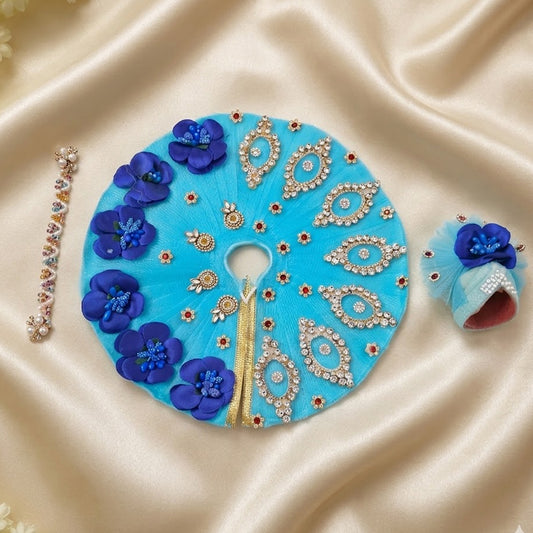
Premium Sky Blue & Royal Blue 3D Flower Laddu Gopal Poshak with Heavy Stone Work & Mukut Set
Regular price From Rs. 389.00Regular priceRs. 489.00Sale price From Rs. 389.00Sale -
Daivik Vastram Peach Peacock Laddu Gopal Poshak Set with Mukut, Patka & Choli
Regular price From Rs. 439.00Regular priceRs. 589.00Sale price From Rs. 439.00Sale -
Laddu Gopal Designer Mala Set - Green Size 0-3
Regular price Rs. 99.00Regular priceRs. 0.00Sale price Rs. 99.00



What Is Shringaar and Why Is It Central to Laddu Gopal Seva?
The word shringaar comes from Sanskrit — it means adornment, decoration, the act of making beautiful. In devotional tradition, shringaar is not merely aesthetic. It is one of the highest forms of seva a bhakt can perform.
In the ancient tradition of Shodashopachara Puja — the sixteen forms of divine service — several steps are dedicated specifically to adorning and dressing the deity. Bathing, anointing with fragrance, offering clothing, applying tilak, offering garlands — these are not optional extras. They are foundational acts of worship that express the bhakt's love through physical care of the divine form.
For Laddu Gopal specifically, shringaar carries extra tenderness. This is baby Krishna — the divine child who lived in Nanda Baba's home in Gokul and was cared for with all the love a parent gives to an adored child. When you perform shringaar for Laddu Gopal, you are stepping into that sacred role of loving parent, of devoted caretaker — the one who ensures Kanha ji is bathed, dressed, adorned, fed, and surrounded with beauty and love every single day.
This understanding transforms shringaar from a routine into a relationship.
Before You Begin — Setting Up Your Shringaar Space
A beautiful shringaar begins before you touch the murti. The space matters. The preparation matters. Here is how to set yourself and your mandir up for a shringaar practice that feels genuinely devotional from the very first step.
Cleanliness Is the Foundation
Always wash your hands thoroughly before beginning shringaar. This is both hygienic and spiritually important — you are about to touch the divine form of Shri Krishna. Clean hands express respect. Many devoted bhakts also bathe before performing morning shringaar, though this is a personal practice rather than a strict requirement.
Gather Everything Before You Start
Nothing breaks the flow of a peaceful shringaar like stopping in the middle to look for the poshak, realise the mukut is in a different drawer, and hunt for the mala across three rooms. Before you begin, gather everything you will need:
- Today's poshak — clean, unfolded, and ready
- The mukut for Thakurji
- The mala or haar
- A small bowl of clean water for abhishek
- Panchamrit ingredients if performing full abhishek — milk, yoghurt, honey, ghee, sugar
- Fragrant items — roli, chandan, haldi, or ittar (attar)
- Fresh flowers if available
- A clean, soft cloth or cotton wool for drying
- Incense and a diya for the aarti that follows
Laying everything out in order before you begin creates a sense of ceremony and intention that deepens the entire shringaar experience.
Your Mindset Is Part of the Practice
Shringaar is not a task to be completed. It is a conversation. Before you begin, take a moment to be present — to release the morning's mental noise and arrive, fully, in front of your Thakurji. Many bhakts softly chant a naam — Jai Shri Krishna, Radhey Radhey, or any mantra that feels natural — as they prepare the space. This simple act of arriving mentally and spiritually in the mandir before beginning the physical shringaar transforms the routine entirely.
Complete Step-by-Step Daily Shringaar Routine for Laddu Gopal
Step 1 — Mangala Darshan and Morning Greeting
The day begins with Mangala Darshan — the auspicious first sight of Thakurji after the night's rest. Before anything else, simply see Him. Offer a namaskar or a folded-hands greeting. Some bhakts softly sing a waking prayer — a prabhatiya or a simple good morning to Kanha ji — to mark the beginning of the day's seva.
Many bhakts also open the mandir doors gently and ring a small ghanti at this point — the sound announces that the day's seva is beginning and awakens the devotional energy of the space.
Step 2 — Removing the Night Poshak
If you follow the practice of dressing Thakurji in a separate, simpler night poshak — a softer, lighter garment appropriate for resting — gently remove it now. Place it aside carefully. Never bundle or crumple Thakurji's poshak, even the night one. Each piece of vastra is a sacred offering and deserves to be treated accordingly.
If your Thakurji wears the same poshak through the night and day, move directly to the abhishek step.
Step 3 — Abhishek (Sacred Bathing)
Abhishek is the ritual bathing of the murti — one of the most sacred and purifying acts of seva. There are two levels of abhishek for home bhakts:
Simple Daily Abhishek: Using a small spoon or your clean finger, gently wipe the murti with a clean, slightly damp cotton cloth or a small amount of clean water. This daily cleansing removes dust and refreshes the murti without requiring the full panchamrit ceremony every day.
Full Panchamrit Abhishek: Performed on special occasions, festivals, or as a weekly practice by dedicated bhakts. Panchamrit — the five sacred substances — consists of:
- Milk (Dudh)
- Yoghurt (Dahi)
- Honey (Shahad)
- Ghee
- Sugar (Mishri)
Each substance is poured over the murti one at a time, gently and reverently, using a small spoon. After the panchamrit, rinse with clean water and dry gently with a soft cotton cloth.
Practical Note: For very small murtis — Size 0 to Size 2 — use only a few drops of each panchamrit substance. The quantities needed are genuinely tiny. Many bhakts use a small tea spoon or medicine dropper for precision.
Step 4 — Drying the Murti
After abhishek, dry Thakurji completely and gently with a clean, soft cotton cloth or cotton wool. Pay particular attention to crevices and decorative details of the murti where moisture can collect. The murti must be completely dry before the poshak is applied — moisture trapped under fabric can damage both the murti and the poshak over time.
Step 5 — Anointing With Fragrance — Chandan and Ittar
Once dry, it is time to anoint Thakurji with fragrance — one of the most sensory and intimate steps of the shringaar. This step connects to the Gandha (fragrance) upachara of traditional puja.
- Chandan (sandalwood paste): Apply a tiny dot of pure chandan to the forehead of the murti using a small stick or the tip of a clean finger. This is the tilak — the sacred mark of auspiciousness.
- Ittar (attar — natural perfume): Apply one tiny drop of natural ittar to the hands or feet of the murti using a clean cotton bud. Use only genuine, alcohol-free ittar — synthetic perfumes or chemical sprays are not appropriate for direct application to the murti.
- Haldi and Roli: Some bhakts also apply a pinpoint of haldi and roli alongside the chandan. This is especially common on festival days and auspicious occasions.
Step 6 — Dressing in the Poshak
This is the heart of the daily shringaar — the step that bhakts often find most meditative, most joyful, and most directly expressive of their love for Thakurji.
How to dress Laddu Gopal in a poshak:
Most Daivik Vastram poshaks for Laddu Gopal are designed as a simple, elegant wrap — a fabric panel that drapes around the murti and is secured with a small tie or tuck at the back. Here is the general process:
- Hold the poshak open with both hands and identify the front face of the design — the most embroidered and decorated side faces outward.
- Centre the front of the poshak on Thakurji's chest, with the decorated face visible.
- Wrap the fabric gently around the back of the murti, tucking or tying the ends at the back or beneath the singhasan.
- Adjust the front panel to sit symmetrically — embroidery centred, border aligned, no pulling or bunching.
- If the poshak includes a small odhna (shoulder cloth), drape it gently over Thakurji's shoulders or over one shoulder as a decorative element.
Take your time with this step. Adjust until it sits exactly right. This is not a task to rush.
Choosing today's poshak: Select the poshak based on the day (festival or regular), the season (summer cotton or winter velvet), and your own devotional feeling. For bhakts following Navratri, Ekadashi, or other colour-specific traditions, choose accordingly.
For a vast range of beautifully crafted poshaks in every colour, season, and size: 👉 Laddu Gopal Dress Collection — Daivik Vastram
Step 7 — Placing the Mukut
The mukut — Thakurji's crown — is placed after the poshak is arranged. Hold the mukut gently between clean fingers and place it carefully on the top of the murti's head. Most mukuts for small Laddu Gopal murtis sit naturally when placed correctly. Adjust until it sits level and straight.
For bhakts who include a morpankh (peacock feather) in the mukut — particularly on special occasions like Janmashtami or Govardhan Puja — this is placed in the mukut after it is seated on the murti.
Step 8 — Offering the Mala
The mala — garland — is draped gently over Thakurji's head and neck. Depending on the type of mala:
- Tulsi mala: The most sacred mala for Vaishnava worship. Drape gently around the neck.
- Fresh flower mala: Roses, marigolds, or mogra. Drape carefully, adjusting so the flowers face outward.
- Decorative fabric mala: Daivik Vastram's decorative mala sets. These sit neatly and are long-lasting between fresh flower days.
Some bhakts use a tulsi mala as the permanent mala and add a fresh flower garland on top on festival days or special occasions.
Step 9 — Final Shringaar Touches
Before the aarti, take a moment to complete the full picture:
- Ensure the singhasan (throne) is clean and properly positioned
- Place a small bansuri (flute) in Thakurji's hand if you observe this practice
- Arrange any decorative items — a tiny umbrella, a fan, a small pot of butter for Makhan Chor occasions
- Place fresh flowers at the base of the singhasan as a pushpa upachara offering
- Light the mandir's background diya if you keep one burning
Step 10 — Bhog Offering
Before the aarti, offer bhog — food. For Laddu Gopal, the traditional morning bhog includes:
- Mishri (sugar crystals)
- Fresh butter (makhan)
- Milk or panchamrit
- Fresh fruit
- Any freshly prepared sweet from the previous evening
Place the bhog on a small plate or thali before Thakurji, ring the ghanti softly, and offer it with a folded-hands namaskar.
Step 11 — Aarti — The Joyful Completion
The morning shringaar completes with aarti — the offering of a lit flame, typically a ghee diya or a camphor flame on a small aarti thali, waved in circular motions before Thakurji while singing or playing an aarti song.
Aarti is the great celebration — the moment of maximum love and joy in the morning seva. It is the bhakt saying: I have prepared everything. I have dressed You. I have offered You food and flowers and fragrance. Now let me simply stand before You with this light and love You completely.
Ring the ghanti throughout. Sing the aarti wholeheartedly. And when it is complete, take the aarti flame and touch it to your eyes and forehead — receiving Thakurji's blessings through the sacred warmth.
Evening Shringaar — Sandhya Aarti
Many devoted bhakts perform a second, simpler shringaar in the evening — the Sandhya (dusk) seva. This typically involves:
- Changing Thakurji into an evening or night poshak (for bhakts who observe the practice of day and night vastra seva)
- Lighting a fresh diya in the mandir
- Offering an evening bhog — typically sweets or fruit
- Performing a brief aarti at dusk
The evening shringaar does not need to be as elaborate as the morning. Its quality lies in its consistency — showing up every evening, lighting the diya, and spending a few minutes with Thakurji as the day ends.
Choosing the Right Daily Poshak — Daivik Vastram's Complete Collection
The centrepiece of every shringaar is the poshak. And the single most important factor in the quality of your daily shringaar experience is having access to a wide, beautifully crafted, genuinely made collection of poshaks for every day, every season, and every occasion.
Daivik Vastram's complete collection offers:
- Daily wear poshaks — simple, elegant, and comfortable for regular morning and evening seva
- Festival poshaks — for Janmashtami, Diwali, Holi, Navratri, Radha Ashtami, and all major occasions
- Seasonal collections — velvet and brocade for winter, cotton and mulmul for summer, silk for transitional seasons
- Complete shringaar accessory sets — mukut, mala, bansuri, and singhasan to complement every poshak
All sizes from Size 0 through Size 8 and above. All fabrics. All festivals. All delivered pan-India with the care that Thakurji's vastra deserves.
Explore the full collection and build your Thakurji's complete wardrobe: 👉 Shop Laddu Gopal Dress — Daivik Vastram
What Bhakts Say About Their Daily Shringaar Practice
- "The morning shringaar has become the most important fifteen minutes of my entire day. I cannot imagine starting the day without it." — Devotee from Delhi
- "Since I started following a proper shringaar routine with good quality poshaks from Daivik Vastram, my entire relationship with Thakurji has deepened in ways I cannot fully explain." — Bhakt from Jaipur
- "My daughter is eight years old and she now helps me with the morning shringaar. Watching her gently place the mukut on Kanha ji is the most beautiful thing in my life." — Devotee from Lucknow
- "The consistency of the practice matters more than the perfection of it. Some mornings are more elaborate, some are simpler. But the love is always the same." — Bhakt from Mumbai
Final Thought — The Shringaar Is the Relationship
The daily shringaar of Laddu Gopal is not a religious obligation to be discharged. It is a relationship to be lived. It is the bhakt and Bhagwan meeting, every morning, in the most tender and direct way possible.
Every poshak you place on Thakurji carries the warmth of your hands. Every mala you drape is a garland of your love. Every aarti flame you wave is your heart, burning brightly in His presence.
That is what shringaar is. That is why it matters. And that is why Daivik Vastram is committed to providing the finest poshaks in India — so that the most important relationship in your devotional life is always dressed in the beauty it deserves.
Jai Shri Krishna! Radhey Radhey! 🙏
Published by Daivik Vastram | India's Most Trusted Laddu Gopal Poshak Brand Honouring Every Bhakt's Daily Seva — One Beautiful Poshak at a Time
Frequently Asked Questions
What is Laddu Gopal shringaar and why is it important in daily seva?
Laddu Gopal shringaar is the devotional practice of adorning and dressing Thakurji every day — including bathing, applying fragrance, dressing in a poshak, offering a mala, and placing the mukut. It is one of the most direct expressions of love in bhakti practice, rooted in the Shodashopachara Puja tradition of sixteen forms of divine service.
How many times should I perform Laddu Gopal shringaar in a day?
Most devoted bhakts perform shringaar twice daily — a full morning shringaar including abhishek, poshak change, mala, mukut, bhog, and aarti, and a simpler evening Sandhya shringaar with a fresh diya, bhog offering, and brief aarti. Many bhakts also observe a third shringaar at noon, though twice daily is the most widely followed practice.
What items do I need to perform Laddu Gopal shringaar at home?
For complete daily shringaar you need: a clean poshak, mukut, mala, clean water for abhishek, chandan and ittar for anointing, a soft drying cloth, a bhog offering of mishri, butter or fruit, a ghee diya or camphor for aarti, a small ghanti, and fresh flowers when available. Daivik Vastram provides premium poshaks and accessories for every shringaar need.
How do I perform abhishek for Laddu Gopal at home?
For daily abhishek, gently wipe the murti with a clean slightly damp cotton cloth to remove dust and freshen the surface. For full Panchamrit abhishek on festivals, pour tiny amounts of milk, yoghurt, honey, ghee, and sugar over the murti one at a time using a small spoon, then rinse with clean water and dry completely with soft cotton before dressing.
How do I put a poshak on Laddu Gopal without damaging it?
Hold the poshak open with the decorated face outward. Centre the embroidered front panel on Thakurji's chest. Gently wrap the fabric around the back and secure by tucking or tying the ends behind the murti. Adjust the front symmetrically. Take your time — never pull or force the fabric. A well-made Daivik Vastram poshak is designed to drape naturally and easily.
How often should I change Laddu Gopal's poshak?
Ideally, change Thakurji's poshak daily as part of the morning shringaar — this is the fullest expression of vastra seva. At minimum, change the poshak every second or third day and always on festival days or auspicious occasions. Seasonal changes — switching to winter velvet in October and summer cotton in March — are also an important part of caring seasonal seva.
What is the correct way to offer mala to Laddu Gopal?
Hold the mala gently between both clean hands and offer it with a namaskar before placing it. Then carefully drape it over Thakurji's head and neck, adjusting so it sits naturally without pulling or tangling. Tulsi mala is used as the permanent sacred garland, with fresh flower garlands added on top for festival and special occasion shringaar.
Can children participate in Laddu Gopal shringaar?
Yes, and it is one of the most beautiful aspects of Laddu Gopal seva. Children can participate in gentle tasks like placing the mala, offering flowers, ringing the ghanti during aarti, or holding the diya under supervision. Involving children in shringaar from an early age cultivates a natural, joyful, and deeply rooted devotional life that stays with them throughout their lives.
What poshak should I use for Laddu Gopal's daily shringaar versus festival days?
For daily shringaar, simple, clean poshaks in comfortable fabrics — cotton, cotton silk, or light georgette — are ideal. Festival days call for more elaborate designs — pure silk, velvet, brocade, or embroidered occasion poshaks from Daivik Vastram's festival collection. Maintaining a separate set of daily wear and festival poshaks is the most devotionally complete approach to Thakurji's wardrobe.
Where can I find the best quality poshaks for Laddu Gopal daily shringaar?
Daivik Vastram at daivikvastram.com offers India's finest Laddu Gopal poshak collection — premium fabrics, all sizes, seasonal and festival ranges, and consistent quality across every design. From simple daily wear cotton poshaks to elaborate festival silk sets, Daivik Vastram provides everything a devoted bhakt needs to perform beautiful, heartfelt daily shringaar for their Thakurji.


