
Complete Laddu Gopal Shringaar List — Poshak, Mukut, Bansuri, Haar and More
Complete Laddu Gopal Shringaar List — Poshak, Mukut, Bansuri, Haar and More
Stand before a fully shringarred Laddu Gopal on any morning — when the diyas are freshly lit, the incense is rising, and every element of His divine form has been carefully adorned — and something happens that words struggle to capture. The heart stills. The eyes fill. And the bhakt standing there understands, without needing anyone to explain it, exactly why this ancient practice of adorning the divine is one of the most sacred acts a human being can perform.
A complete shringaar is not a single item. It is a universe of care — a constellation of devoted choices, each element chosen thoughtfully, each one contributing its specific beauty to the whole. The poshak alone, however magnificent, is only one voice in this devotional symphony. The mukut, the haar, the bansuri, the singhasan, the mala, the accessories — each one plays its part in completing the divine image of your Kanha ji.
Many bhakts, particularly those new to the seva of Laddu Gopal, are uncertain about what a complete shringaar actually includes — what items are essential, what is optional, what is traditional for specific occasions, and where to find them all. This comprehensive guide from Daivik Vastram answers every one of those questions.
This is your complete, definitive Laddu Gopal shringaar list — covering every item from the most fundamental to the most elaborate, with guidance on what each item represents, how to use it, and how to build your complete shringaar collection thoughtfully and beautifully over time.
-
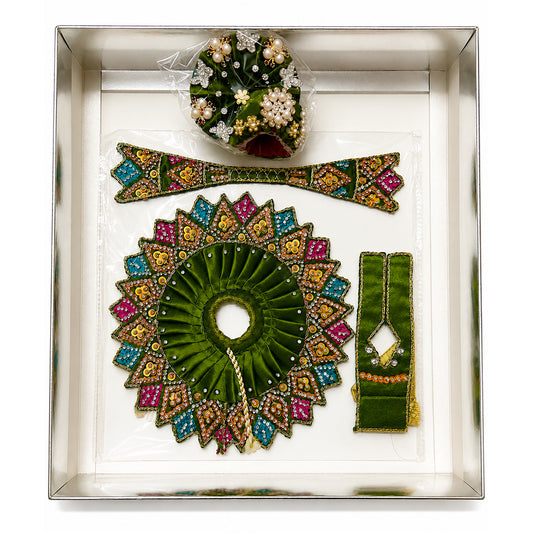
Green Handcrafted Laddu Gopal Dress Set with Mukut
Regular price From Rs. 689.00Regular priceRs. 539.00Sale price From Rs. 689.00 -
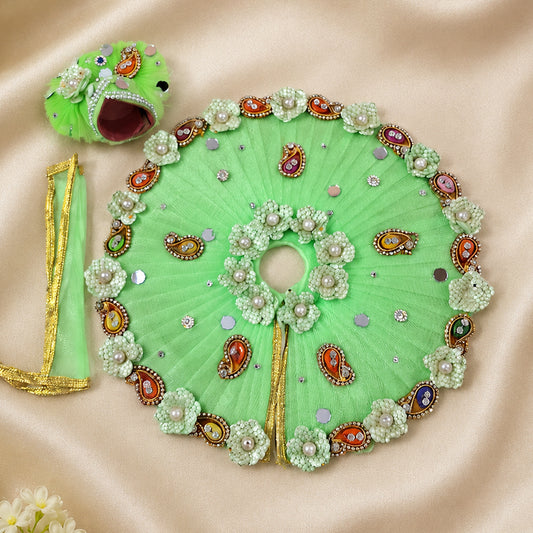
Parrot Green Laddu Gopal Designer Poshak with Mukut & Patka
Regular price From Rs. 489.00Regular priceRs. 589.00Sale price From Rs. 489.00Sale -
Daivik Vastram Peach Peacock Laddu Gopal Poshak Set with Mukut, Patka & Choli
Regular price From Rs. 439.00Regular priceRs. 589.00Sale price From Rs. 439.00Sale -
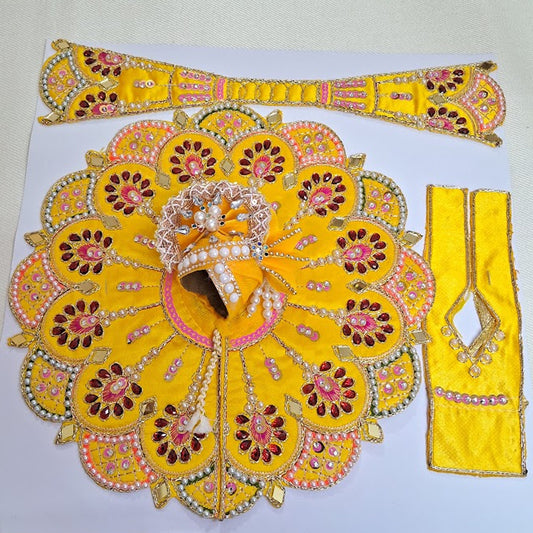
Premium Designer Yellow Laddu Gopal Poshak with Heavy Kundan Work & Jewelled Mukut
Regular price From Rs. 589.00Regular priceRs. 739.00Sale price From Rs. 589.00Sale -
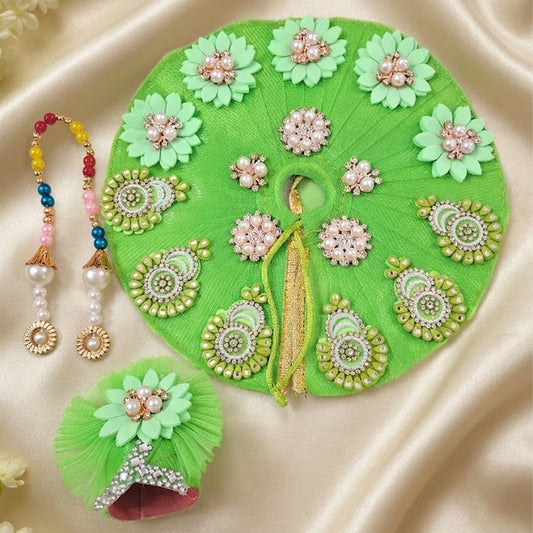
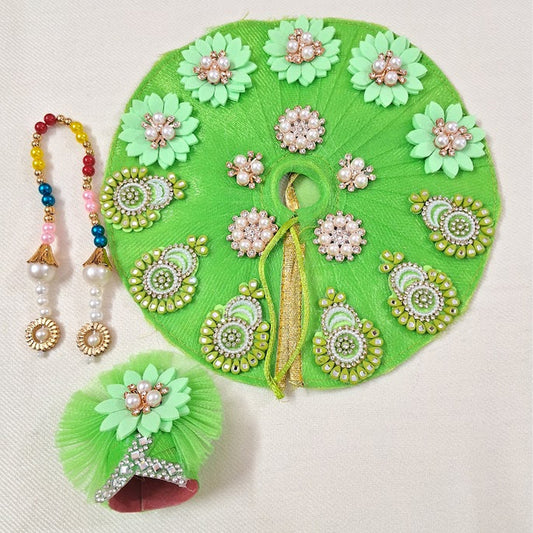
Premium Green Flower Laddu Gopal Dress Set with Pagdi & Mala
Regular price From Rs. 389.00Regular priceRs. 489.00Sale price From Rs. 389.00Sale



What Is Shringaar — The Devotional Philosophy Behind the Practice
Before the list, the understanding.
Shringaar is derived from the Sanskrit word meaning adornment — but in the devotional tradition, it means something far richer than decoration. Shringaar in the context of deity worship is the act of making the divine beautiful — of offering beauty itself as a form of love, of expressing through physical care and aesthetic attention the devotee's deepest reverence for the sacred form they are blessed to serve.
In the Pancharatra Agama tradition — the classical system of deity worship that forms the foundation of Vaishnava seva — shringaar is one of the most elaborated and detailed aspects of puja. It is subdivided into multiple categories: vastra (clothing), abharana (ornaments), sugandha (fragrance), and pushpa (flowers). A complete shringaar touches all of these categories, each one offering a specific quality of beauty to the divine form.
For Laddu Gopal — the baby Krishna, the beloved divine child — shringaar carries an additional layer of tenderness. This is not just ritual adornment of a deity. This is a parent dressing their most beloved child. And the loving parent does not stop at just a poshak — they ensure everything is in place, from the crown on the head to the decorations around the feet, before feeling satisfied that their child is properly cared for.
This is the spirit in which every item on this complete shringaar list should be understood.
Complete Laddu Gopal Shringaar List
Category 1 — Vastra (Clothing)
1. Poshak (Main Dress)
The poshak is the foundation and centrepiece of every shringaar. It is the garment that wraps around Thakurji's body, defines the colour and mood of the day's adornment, and carries the primary embroidery and decorative work that makes each dressing unique.
A complete poshak wardrobe for Laddu Gopal includes:
- Daily wear poshaks in comfortable cotton or light silk for regular morning and evening puja
- Seasonal poshaks — winter velvet and brocade, summer cotton and mulmul, transitional georgette
- Festival poshaks — pure silk with heavy embroidery for Janmashtami, Diwali, Navratri, Holi, Radha Ashtami
- Weekly colour poshaks — for bhakts who follow the seven-day colour ritual
Fabric choices: Pure silk, premium velvet, handwoven brocade, fine cotton, mulmul, georgette, art silk
What to look for: Genuine premium fabric, accurate sizing, clean embroidery work, and consistent quality across designs. Daivik Vastram's poshak collection offers all of this across every size from Size 0 to Size 14.
2. Odhna (Shoulder Drape or Upper Cloth)
Many poshak sets include an odhna — a small rectangular cloth that drapes over Thakurji's shoulders or is arranged as an upper garment accent. The odhna completes the dressed look, adds a second colour or design element to the overall shringaar, and echoes the traditional North Indian way of draping clothing.
For Laddu Gopal, the odhna is typically made in matching or complementary fabric to the main poshak — often with a printed border or a contrasting colour that frames the main poshak beautifully.
3. Peetambar (Sacred Yellow Cloth)
The peetambar — the iconic yellow silk cloth traditionally associated with Shri Krishna's divine form — is one of the most devotionally significant elements of a complete Thakurji shringaar. In classical descriptions of Krishna's form, the peetambar is invariably present — draped at the waist or across the shoulders as a distinctive, radiantly golden-yellow garment.
Including a peetambar in Thakurji's shringaar on special occasions, on Thursdays (Guruvar — the day associated with the Guru and with yellow), and during festivals is a deeply traditional devotional practice. It connects the murti directly to the classical iconographic image of Shri Krishna that devotees have loved for thousands of years.
Category 2 — Abharana (Ornaments and Crown)
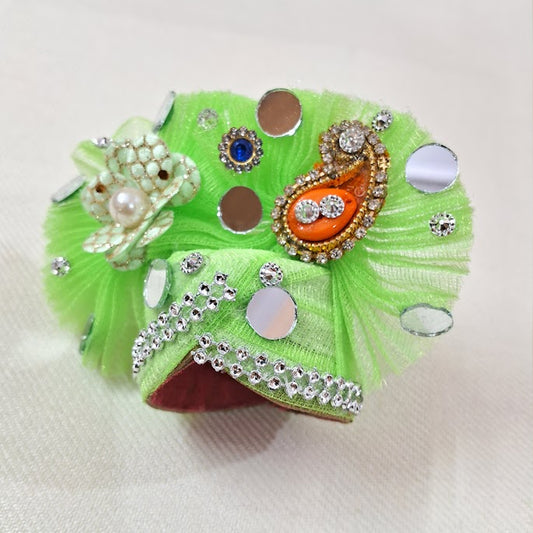
4. Mukut (Crown)
The mukut is the crown — the most visually prominent ornament in the entire shringaar. No image of Thakurji fully adorned is complete without a mukut. It frames the face, communicates royalty and divinity, and completes the visual image of Kanha ji as the Lord of all creation.
Mukuts for Laddu Gopal come in several styles:
- Daily wear mukut — simpler, lighter designs in gold finish for regular puja
- Festival mukut — more elaborate designs with stone embellishments, peacock motifs, and decorative details for special occasions
- Morpankh mukut — the peacock feather crown, the most iconic of all Kanha ji ornaments and deeply associated with Vrindavan and the forest leelas
- Flower mukut — for festival occasions, a fresh flower crown made from small blooms is a beautiful traditional option
Sizing: Mukuts must be sized appropriately for the murti — a mukut that is too heavy or too large will not sit properly. When selecting, match the mukut to the murti size as carefully as you match the poshak.
5. Morpankh (Peacock Feather)
The morpankh — the peacock feather — is Shri Krishna's most iconic personal ornament. In almost every classical image and description of Krishna, the peacock feather adorns His mukut, identifying Him unmistakably across every style of Indian art across every century.
For Laddu Gopal's shringaar, the morpankh is placed in the mukut — typically at the front or side — and it immediately transforms the entire look. There is something about the morpankh that makes Kanha ji unmistakably Himself — not just any beautiful child, but the divine cowherd of Vrindavan.
Morpankh options range from natural peacock feathers (cleaned and treated) to beautifully crafted decorative versions in metal, silk, or fabric. Both are appropriate for shringaar.
6. Karna Phool (Ear Ornaments)
Tiny ear ornaments — karna phool — are part of the traditional complete shringaar for Laddu Gopal. These tiny gold or gold-finish ornaments are placed at the sides of the murti's head to represent ear jewellery. For very small murtis (Size 0 to Size 2), karna phool may not be practical, but for Size 3 and above, they add a delightful detail of completeness to the full adorned look.
7. Kangan and Kade (Wrist Ornaments)
Small wrist ornaments — bangles or kade in gold finish — represent the traditional jewellery worn by the divine child of Gokul. These tiny ornaments, when sized correctly to the murti, create an image of Thakurji adorned from head to wrist that feels complete in a way that poshak and mukut alone do not quite achieve.
Category 3 — Pushpa (Flowers and Garlands)
8. Haar or Mala (Flower Garland)
The haar or mala — the garland — is one of the most sacred and ancient offerings in the entire puja tradition. The act of garlanding the deity is specifically mentioned as one of the sixteen Shodashopachara upacharas. For Laddu Gopal, the mala is draped over the head and around the neck and is considered an essential element of complete shringaar.
Types of mala for Thakurji's shringaar:
- Tulsi mala — the most sacred garland for Vaishnavas. Tulsi beads are considered the highest offering to Vishnu and Krishna. Kept as the permanent sacred mala, with fresh garlands added on top for special occasions.
- Fresh flower mala — marigolds, roses, mogra, champa. Fresh flowers are the ideal daily offering when available. Different flowers carry different devotional associations — mogra for purity and fragrance, marigold for auspiciousness and abundance, rose for love.
- Decorative fabric or artificial mala — beautifully crafted decorative mala sets that maintain their form and beauty long-term. Ideal for bhakts who cannot source fresh flowers daily.
- Vaijayanti mala — the traditional forest seed mala associated specifically with Shri Krishna. For bhakts who want the most traditionally authentic garland for Thakurji.
9. Pushpa (Loose Flowers for the Mandir)
Beyond the garland placed on Thakurji, fresh flowers scattered at the base of the singhasan, arranged in small vases beside the murti, or laid as a carpet beneath His feet are an important part of the complete shringaar aesthetic. The tradition of pushpa upachara — offering of flowers — is one of the most widely practised aspects of puja across all traditions.
The most auspicious flowers for Laddu Gopal's pushpa offering include tulsi leaves, lotus, rose, marigold, mogra, and champa.
Category 4 — Accessories and Divine Instruments
10. Bansuri (Sacred Flute)
The bansuri — the divine flute — is Shri Krishna's most beloved possession and the instrument through which He is most universally recognised. In classical iconography and devotional poetry, the bansuri is always present in Krishna's hands — the instrument whose music stops rivers, moves mountains, and draws every living being irresistibly toward the divine.
For Laddu Gopal's shringaar, a miniature decorative bansuri is placed in Thakurji's hand — typically in the right hand, with the fingers curved naturally around it. Bansuri options include:
- Simple gold-finished metal flutes
- Decorative bamboo-finish miniatures
- Elaborately crafted silver or gold-plated versions for festival occasions
Even the smallest bansuri transforms the shringaar profoundly — Kanha ji with His flute is instantly, completely, unmistakably Himself.
11. Makhan Pot (Butter Pot)
The makhan pot — the small pot of sacred butter — is one of the most endearing and beloved accessories in Laddu Gopal's shringaar collection. Baby Krishna's butter-stealing mischief is one of the most universally loved stories in all of Hindu mythology — and placing a tiny makhan pot in Thakurji's hand or at His feet is a way of honouring that divine, irresistible mischief.
On specific occasions — Janmashtami night, Mondays, and auspicious Ekadashi celebrations — many bhakts specifically dress Thakurji in the Makhan Chor style with the butter pot as the central accessory.
12. Shankha (Sacred Conch)
A small decorative shankha — conch shell — is a traditional divine instrument associated with Vishnu and Krishna. Placed beside Thakurji in the mandir rather than in the hand, the shankha is one of the four principal attributes of Vishnu and its presence in the shringaar arrangement adds a dimension of divine completeness.
13. Chakra and Sudarshan (Divine Disc)
Similarly, a small decorative Sudarshana Chakra — the divine discus — placed beside Thakurji represents one of Krishna's principal divine attributes. For bhakts who want the most complete and theologically comprehensive shringaar arrangement, including all four divine attributes — shankha, chakra, lotus, and mace — is the traditional ideal.
Category 5 — Asana and Housing
14. Singhasan (Divine Throne)
The singhasan — the throne on which Thakurji is seated — is one of the most important non-ornamental elements of a complete shringaar. A beautiful murti in a magnificent poshak sitting on a crude or inappropriate base loses much of its visual and devotional impact. The right singhasan frames Thakurji's adorned form and completes the image.
Singhasan options range from simple wooden platforms with gold paint to elaborately carved and decorated thrones with fabric cushions, decorative pillars, and ornamental details. For festivals, some bhakts use a specially decorated festival singhasan different from the one used for daily seva.
15. Jhula (Swing)
The jhula — the decorative swing — is one of the most joy-filled elements of a Laddu Gopal shringaar collection. The image of Kanha ji seated on a beautifully decorated swing is among the most beloved in all of devotional iconography. Swings for Thakurji come in wood, metal, or decorative fabric versions, with ornamental hangings, bells, and sometimes mirrored or embroidered fabric canopies.
The jhula is particularly important on Janmashtami night — when the tradition of jhoolan (swinging the deity) is performed — and during the Jhoolan Panchami festival in the Shravan month when swinging Thakurji is central to the day's seva.
16. Chhatri (Decorative Umbrella)
The chhatri — the small decorative umbrella placed above Thakurji — is a symbol of royal dignity and divine protection. In traditional temple worship, the chhatri over the deity's head is an important element of the formal deity presentation. For home mandir shringaar, a small decorative chhatri placed above or behind the murti adds a beautiful touch of traditional devotional aesthetic.
Category 6 — Fragrance and Sacred Substances
17. Chandan (Sandalwood Paste)
A tiny dot of pure sandalwood paste applied to Thakurji's forehead as a tilak is one of the most sacred acts of daily shringaar. Chandan is cooling, fragrant, and deeply auspicious — its application marks the beginning of formal puja and connects the physical adornment with the internal devotional intention.
18. Ittar (Natural Attar Perfume)
A single drop of natural, alcohol-free ittar applied to Thakurji's hands or feet with a clean cotton bud anoints the divine form with fragrance — the gandha upachara of traditional puja. Rose ittar, jasmine ittar, and sandalwood ittar are the most traditional choices for Laddu Gopal shringaar.
19. Haldi and Roli
Applied as tiny points alongside the chandan tilak — haldi (turmeric) and roli (red vermilion powder) — these traditional auspicious substances complete the tilak offering and connect the shringaar to India's oldest ritual adornment traditions.
Building Your Complete Shringaar Collection — A Practical Approach
For bhakts new to Laddu Gopal seva, building a complete shringaar collection can feel overwhelming when viewed all at once. Here is a practical, unhurried approach:
The Essential Starter Shringaar (Begin here):
- 1 daily wear poshak
- 1 mukut
- 1 tulsi mala
- 1 bansuri
- Chandan, ittar, and roli
The Complete Home Shringaar (Build over time):
- 3 to 5 poshaks (seasonal and festival variety)
- 2 mukuts (daily and festival)
- Morpankh
- Decorative and fresh flower mala set
- Singhasan
- Makhan pot
- Shankha and chakra
- Peetambar
The Full Devotional Shringaar Collection: All of the above plus jhula, chhatri, karna phool, kangan, seasonal poshak complete wardrobe, and festival-specific accessories.
Every poshak and accessory in this complete list is available from Daivik Vastram — crafted with the devotional intention and premium quality that Thakurji's complete shringaar deserves.
Explore the complete Laddu Gopal poshak and shringaar collection: 👉 Laddu Gopal Dress Collection — Daivik Vastram
Feeling of a Complete Shringaar
There is a moment — experienced by every bhakt who has performed a truly complete Laddu Gopal shringaar — when the last element is placed, the last adjustment made, the last flower arranged at His feet, and you step back to look.
In that moment, Thakurji does not look like a murti. He looks like a living presence — adorned, cared for, seated in royal dignity, surrounded by beauty. He looks exactly like what every bhakt knows in their heart He is: the most beloved being in existence, present in this home, in this mandir, in this moment of completely devoted love.
That is what a complete shringaar creates. And that is why every single item on this list matters.
Shop the complete Daivik Vastram shringaar collection for your Kanha ji: 👉 Shop Laddu Gopal Shringaar Items — Daivik Vastram
Jai Shri Krishna! Radhey Radhey! 🙏
Published by Daivik Vastram | India's Most Trusted Laddu Gopal Poshak Brand Completing Every Shringaar, Honouring Every Bhakt — One Sacred Item at a Time
Frequently Asked Questions
What items are included in a complete Laddu Gopal shringaar?
A complete Laddu Gopal shringaar includes poshak, odhna, peetambar, mukut, morpankh, karna phool, kangan, tulsi mala, fresh flower haar, bansuri, makhan pot, singhasan, jhula, chhatri, shankha, chakra, chandan tilak, ittar, and haldi-roli. Together these items cover all six shringaar categories — vastra, abharana, pushpa, instruments, asana, and sacred fragrance offerings.
What is the most important item in Laddu Gopal shringaar?
The poshak is the foundation of every shringaar — the primary garment that defines the colour, mood, and visual identity of each dressing. After the poshak, the mukut and mala are the next most essential items, completing the adorned divine image. All three together form the irreducible minimum of a complete and devotionally meaningful daily shringaar for Laddu Gopal.
What is the significance of the bansuri in Laddu Gopal shringaar?
The bansuri is Shri Krishna's most iconic personal possession — the divine flute through which He calls devotees toward the divine. Placing a miniature bansuri in Thakurji's hand during shringaar immediately identifies the murti as Krishna in His most essential Vrindavan identity, connecting the home shringaar directly to the central devotional imagery of the Bhagavata tradition.
What type of mala is best for Laddu Gopal daily shringaar?
Tulsi mala is the most sacred and traditional mala for daily Laddu Gopal shringaar — deeply revered in the Vaishnava tradition as the highest floral offering to Krishna. Fresh flower garlands in mogra, rose, or marigold are ideal additions on top of the tulsi mala for special occasions. Decorative fabric mala sets provide a long-lasting alternative for bhakts who cannot source fresh flowers every day.
What is a singhasan and why does Laddu Gopal need one?
A singhasan is the divine throne on which Thakurji is seated — an essential element that frames the adorned murti with royal dignity. A beautifully dressed Laddu Gopal on an appropriate singhasan creates a complete and visually harmonious devotional image. Without a proper singhasan, even the most magnificent poshak and mukut cannot achieve the full impact of a truly complete shringaar.
What is the peetambar and when should it be used in Laddu Gopal shringaar?
The peetambar is the iconic yellow silk cloth traditionally associated with Shri Krishna's divine form — one of His most recognisable iconographic attributes. It should be included in Thakurji's shringaar on Thursdays, during festivals, on Ekadashi, and whenever a particularly traditional or classically complete shringaar is desired. It connects the home murti directly to centuries of classical Krishna iconography.
How do I build a complete shringaar collection for Laddu Gopal over time?
Begin with the essential starter set — a poshak, mukut, tulsi mala, bansuri, and chandan. Add a singhasan and morpankh next. Gradually build seasonal and festival poshaks, a jhula, makhan pot, shankha, chakra, and decorative accessories over subsequent months. A complete collection need not be assembled all at once — building thoughtfully over time is itself a beautiful form of devotional intention.
What is the morpankh and why is it so important in Kanha ji's shringaar?
The morpankh — peacock feather — is Shri Krishna's most personal and iconic ornament, invariably present in classical devotional art and scripture descriptions of His divine form. Placing a morpankh in Thakurji's mukut during shringaar is a direct, visual tribute to His Vrindavan identity and one of the most devotionally resonant single additions a bhakt can make to the complete shringaar.
Does Daivik Vastram offer all Laddu Gopal shringaar items including accessories?
Yes. Daivik Vastram's collection includes premium Laddu Gopal poshaks in all sizes and fabrics along with a range of complementary shringaar accessories — mukut sets, mala and haar collections, and seasonal and festival-specific items. Every product is crafted with the devotional intentionality and premium quality that a complete and beautiful Thakurji shringaar deserves.
Can I gift a complete shringaar set for Laddu Gopal from Daivik Vastram?
Yes. A curated Daivik Vastram shringaar gift set — combining a premium poshak with complementary accessories — is one of the most meaningful and memorable devotional gifts imaginable. Perfect for housewarmings, new Laddu Gopal adoptions, Janmashtami, Diwali, or any occasion where you want to honour a fellow bhakt with a gift that truly touches their devotional heart and their Thakurji's wardrobe.


